
TL;DR

Get baking supplies delivered free with Prime
- Fast, free delivery on millions of items
- Prime Video, Amazon Music and more included
- Member-only deals all year
Cross-contamination in baking can transfer allergens like nuts, dairy, and wheat, often from overlooked surfaces or tools. Implementing strict hygiene and segregation minimizes these hidden risks, protecting allergy sufferers and building trust.
How Cross-Contamination Sneaks Into Your Baking—And Why You Might Not See It
Cross-contamination in baking happens when tiny bits of allergens like nuts, dairy, or eggs transfer from one ingredient or surface to another. Even if you clean your tools, some allergens cling stubbornly, especially if you don’t use proper cleaning techniques. For example, a baker might use the same spatula for nut cookies and gluten-free muffins, unknowingly leaving traces behind. These residues can be invisible but deadly for allergic consumers.
Think of allergens as tiny, sticky particles. They latch onto utensils, bowls, or countertops, waiting to transfer. A single crumb of a walnut cookie can carry enough allergen to trigger a reaction. This is why, in baking, even small oversights matter a lot.
Understanding how these particles behave helps you grasp why meticulous cleaning and dedicated tools are critical. The implications are serious: a minor oversight can lead to life-threatening allergic reactions, legal liabilities, and damage to your reputation. The tradeoff often involves additional time and effort—investing in dedicated equipment or thorough cleaning routines—but these are essential for safety and trust.
Products Worth Considering

Breville Bambino Espresso Machine, Brushed Stainless Steel

Breville Barista Pro Espresso Machine with Grinder, Brushed Stainless Steel

Ninja PossibleCooker PRO Plus 11-in-1 8.5 qt Trace Blue (MC2002BL)
As an affiliate, we earn on qualifying purchases.
5 Common Mistakes That Lead to Hidden Allergens in Your Baked Goods
| Mistake | Example | Impact |
|---|---|---|
| Sharing utensils without cleaning | Using the same spoon for peanut butter and dairy-free frosting | Transfer of nuts or dairy traces, risking allergic reactions |
| Not cleaning equipment thoroughly | Rinsing a mixing bowl quickly after using flour and nuts | Sticky allergen residues remain, which can cause cross-contact in subsequent batches |
| Using the same surfaces | Rolling dough on a countertop used for nut-filled pastries | Cross-contact occurs through contact points, especially if surfaces aren’t properly sanitized |
| Mixing allergen and allergen-free ingredients in the same bowl | Adding nuts into a batter without proper segregation | This can unknowingly contaminate the entire batch, making it unsafe for those with allergies |
| Failing to label or segregate allergen-free products | Putting allergen-free cookies in the same packaging as nut cookies | Consumers may unknowingly consume allergens, risking severe reactions and liability issues |
These small mistakes often seem insignificant but can have devastating consequences. For example, a baker might overlook cleaning a spatula after handling peanuts, then use it for a nut-free loaf. The tiny peanut residue can cause a dangerous allergic reaction for sensitive individuals. Recognizing why these mistakes matter emphasizes the importance of rigorous procedures—each step reduces risk and builds trust with your customers.
Tools and Techniques That Keep Allergens Out of Your Baked Goods
Prevention is the best medicine. Here are five proven methods to cut down the risk of cross-contact, along with understanding their importance:
- Use dedicated equipment: Have separate bowls, spoons, and baking sheets for allergen-free baking. This prevents accidental transfer, especially when handling multiple recipes or ingredients.
- Color-code utensils: Assign colors to different allergen categories—red for nuts, blue for dairy, etc. This visual cue reduces human error by making it easy to identify which tools are safe to use for allergen-free products.
- Clean thoroughly: Wash all tools and surfaces with hot water and soap. For stubborn residues, use a commercial degreaser or allergen-specific cleaner. Proper cleaning removes both visible and microscopic allergen traces, which are often invisible but still dangerous.
- Implement strict storage: Store allergens and allergen-free ingredients separately, ideally in labeled, airtight containers. Proper storage reduces the risk of accidental cross-contact during ingredient retrieval or inventory management.
- Train your staff or household: Educate everyone on the importance of hygiene and segregation, emphasizing that tiny traces matter. Well-trained staff are less likely to make mistakes, and ongoing education reinforces best practices, creating a culture of safety.
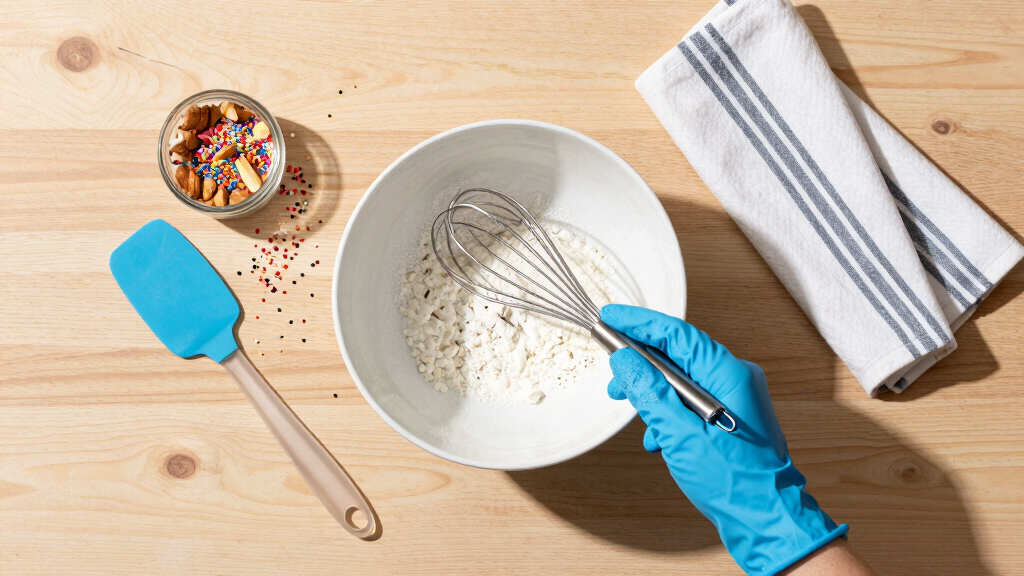
For example, a bakery using disposable gloves and color-coded spatulas can drastically reduce accidental cross-contact. When you treat allergen management like a safety protocol, you protect your customers—and your reputation. Investing in these techniques might require initial effort and resources, but the long-term benefits—trust, safety, and compliance—are invaluable.
How to Spot Signs of Cross-Contact in Your Baked Goods
Spotting cross-contact isn’t always obvious. It often shows up as tiny specks or unexpected flavors, but understanding what to look for and why it matters can prevent serious health issues. When a gluten-free muffin suddenly tastes nutty, that’s a clear red flag—indicating contamination that could be life-threatening for allergic consumers.
Here are quick tips with deeper insight:
- Check for visible crumbs or specks, especially near edges or seams. These tiny traces can be remnants of previous batches or improperly cleaned equipment, serving as silent indicators of contamination.
- Ask yourself if the flavor differs from previous batches—has a nut or dairy note appeared? An unexpected flavor can be an early warning sign of cross-contact, especially if the recipe is supposed to be allergen-free.
- Test your cleaning routines regularly—are utensils and surfaces truly free of allergen residues? Using allergen test kits or swabs can provide concrete evidence, giving confidence that cleaning protocols are effective.
- Use allergen test kits if available, especially if you serve multiple allergen-sensitive customers. These tools can detect minute traces that are otherwise invisible, helping you identify contamination points before products reach consumers.
- Maintain detailed records of ingredients and cleaning schedules to trace potential cross-contact points. Having documentation helps identify patterns and areas needing improvement, ultimately reducing risks over time.
For example, the baker who notices a slight almond flavor in her gluten-free brownies after a nut-filled batch can trace the source by reviewing her cleaning and storage routines. Often, a small oversight—like a forgotten utensil or a poorly cleaned surface—is the culprit. Deep understanding and vigilant inspection are key to maintaining allergen safety and avoiding potentially life-threatening situations.
What Regulations Are Doing to Help Keep Your Baked Goods Safe
Regulatory bodies worldwide now require clearer allergen labeling and hygiene practices. These rules aim to protect consumers and push bakeries to adopt safer habits.
For instance, the FDA’s Food Allergen Labeling and Consumer Protection Act (FALCPA) mandates clear allergen declarations on packaging. Many countries follow suit with similar laws, recognizing that transparency saves lives and reduces liability.
Additionally, some bakeries pursue allergen-free certification—an extra layer of trust for customers. Staff training programs are now common, emphasizing the importance of preventing cross-contact. These certifications and regulations create a framework that encourages consistent, safe practices across the industry.
These regulations and certifications aren’t just bureaucratic hoops—they’re practical tools that help identify and mitigate risks, especially in busy commercial kitchens where oversight can easily happen. They promote a culture of accountability, ensuring that allergen management becomes an integral part of daily operations, ultimately reducing the likelihood of accidental exposure and protecting consumers’ health.
Your Top 3 Takeaways for Preventing Cross-Contamination
- Segregate ingredients and tools: Keep allergen-free and allergen-containing items apart at all times. This simple step prevents accidental transfer that could have severe health consequences.
- Clean with purpose: Use hot water, soap, and allergen-specific cleaners to remove residues thoroughly. Regular, rigorous cleaning is essential because microscopic traces can still cause reactions.
- Label and train: Clearly label storage and educate everyone involved about cross-contact risks. Proper training and labeling foster a safety-first mindset, reducing errors and building consumer trust.
- Adopt visual cues: Use color-coded utensils and dedicated equipment to prevent mix-ups. Visual management reduces reliance on memory alone, minimizing human error.
- Stay current: Follow local regulations and stay updated on best practices for allergen management. Continuous education ensures your procedures evolve with industry standards and scientific understanding.
Frequently Asked Questions
How can I tell if a baked good is truly allergen-free?
Always check labels and ask the baker about their procedures. Look for allergen-free certifications and transparent ingredient lists to ensure safety.What’s the easiest way to prevent cross-contact in a busy bakery?
Use dedicated equipment, color-code utensils, and implement strict cleaning routines. Training staff on allergen protocols also makes a big difference.Can cross-contact happen even with careful cleaning?
Yes. Residues can cling stubbornly, especially on porous surfaces or with inadequate cleaning. Regularly use allergen-specific cleaners and test surfaces if possible.What should I do if I suspect cross-contact in my baked goods?
Stop serving the product, inform anyone with allergies, and review your cleaning and storage routines. When in doubt, discard to be safe.Laws now require clear labeling and hygiene standards, encouraging bakeries to adopt safer practices and reduce accidental cross-contact.
Conclusion
Every tiny trace of an allergen is a potential threat. Treat your kitchen like a safe zone—meticulous cleaning, segregation, and awareness are your best defenses. Remember, a clean, clear, and cautious approach protects both your reputation and your customers’ health. When in doubt, ask—never assume. Your attention to detail saves lives.