
TL;DR

Get baking supplies delivered free — and shop member deals
- Fast, free delivery on millions of items
- Access to Prime Big Deal Days deals on October 6–7
- Prime Video, Amazon Music and more included
Self-rising flour combines flour, baking powder, and salt for quick baking. Making your own at home is simple, cost-effective, and lets you control ingredients—ideal for healthier, personalized baking.
Making your own self-rising flour is quick, simple, and gives you control over ingredients.
Store homemade mixes in airtight containers away from humidity to keep leavening fresh.
Adjust recipes carefully—don’t add extra baking powder or salt when using homemade self-rising flour.
Homemade self-rising flour extends shelf life and reduces exposure to preservatives.
Experiment with gluten-free or organic flours for healthier, personalized baking options.
What Exactly Is Self-Rising Flour? Think of It as Your Baking Shortcut
Self-rising flour is a specialized blend of all-purpose flour, baking powder, and salt. Its primary purpose is to streamline the baking process by combining leavening agents directly into the flour, eliminating the need for additional ingredients. This convenience is especially valuable in recipes that rely on quick rising, such as biscuits, pancakes, and muffins. However, understanding its composition reveals that it’s not just about speed—it’s about consistency and reliability. The ratio of baking powder and salt is calibrated to ensure optimal rising and flavor, which can vary slightly depending on the brand or homemade mix. Consequently, knowing what’s inside allows bakers to adjust for dietary needs or flavor preferences, making it a versatile staple for both novice and experienced bakers. The key takeaway is that this blend offers a predictable rise, reducing the guesswork and ensuring that each batch turns out light and fluffy, provided the leavening agents are fresh and correctly measured.
As an affiliate, we earn on qualifying purchases.
How to Make Your Own Self-Rising Flour in 3 Easy Steps
- Start with 1 cup of all-purpose flour. This serves as the base, providing the bulk and structure necessary for most baked goods.
- Add 1 1/2 teaspoons of baking powder. This leavening agent releases carbon dioxide when exposed to moisture and heat, creating the bubbles that make baked goods rise. The specific amount ensures a balanced lift without over- or under-leavening, which could affect texture or flavor.
- Sprinkle in 1/4 teaspoon of salt—this enhances flavor and can slightly influence the leavening process by balancing sweetness and acidity, especially in recipes like biscuits or quick breads.
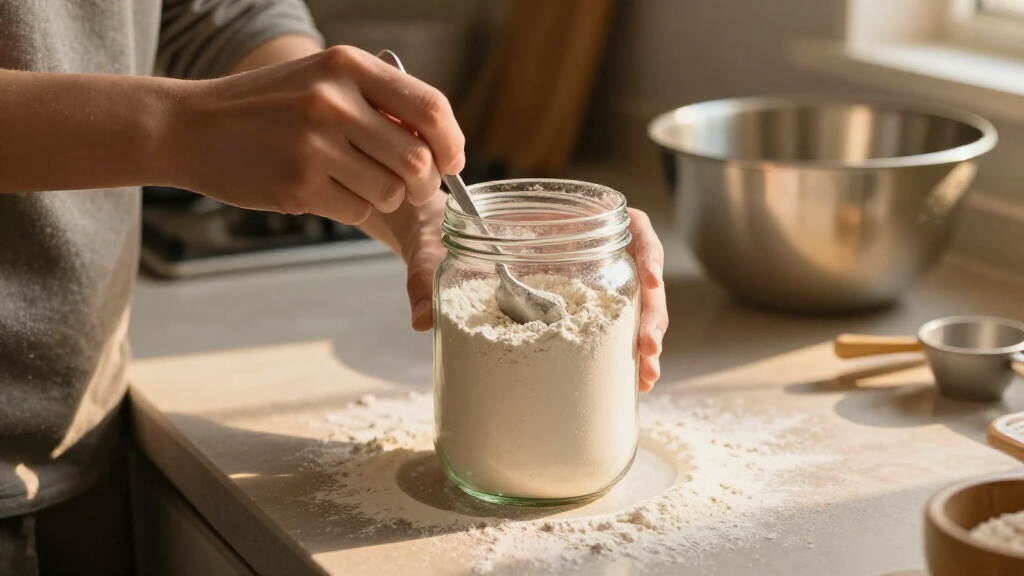
Thoroughly sift or whisk these ingredients together until they are uniformly combined. Proper mixing ensures each spoonful contains the right proportion of leavening agents, which is critical for consistent results. Store your homemade mix in an airtight container in a cool, dry place—this preserves the potency of the baking powder and prevents moisture from degrading the mixture. When stored properly, your homemade self-rising flour can stay fresh for 6-8 months, making it a cost-effective and reliable staple. Preparing this in advance means you’re always ready to bake, with the added advantage of knowing exactly what’s in your mix—free from preservatives or artificial additives that are common in commercial products.
homemade self-rising flour ingredients
As an affiliate, we earn on qualifying purchases.
As an affiliate, we earn on qualifying purchases.
Homemade vs. Store-Bought: Which Is Better for Your Kitchen?
| Feature | Store-Bought Self-Rising Flour | Homemade Self-Rising Flour |
|---|---|---|
| Freshness | May lose potency over time due to exposure to moisture and air, especially if not stored properly. This can lead to less effective leavening, resulting in denser baked goods. | Always fresh when made just before baking. You control the timing, ensuring the leavening agents are at their peak, which directly impacts the rise and texture of your baked goods. |
| Ingredients | Pre-mixed, often containing preservatives or anti-caking agents to prolong shelf life. These additives can be undesirable for those seeking clean, natural ingredients. | Control over ingredients—use pure, natural components with no preservatives or additives. You can also customize the salt or leavening ratio based on your dietary preferences or recipe needs. |
| Cost | Varies depending on brand and packaging, often more expensive per use due to packaging and marketing. | Cheaper—requires only basic pantry ingredients that you likely already have, making it a cost-effective choice in the long run. |
| Customization | Limited—what you buy is what you get, with little flexibility to adjust for specific recipes or dietary restrictions. | Highly customizable—adjust salt levels, add herbs, or tweak leavening agents for specific recipes or health needs, giving you a versatile baking staple. |
Making your own self-rising flour isn’t just about convenience; it’s about quality and control. Freshly prepared mixes ensure optimal leavening, which is crucial for achieving the desired rise and texture. Moreover, it allows you to avoid unwanted additives, preservatives, or anti-caking agents that are common in commercial products. This control translates into healthier, more natural baked goods, especially important for those with dietary restrictions or sensitivities. Although store-bought options are undeniably convenient, the tradeoff often involves less transparency and freshness. By making your own, you embrace a more mindful approach to baking—one that emphasizes quality, health, and customization.
As an affiliate, we earn on qualifying purchases.
Why Making Your Own Is a Game-Changer for Healthy Baking
When you make your own self-rising flour, you gain unprecedented control over every ingredient—this is especially significant in the context of health and dietary restrictions. Commercial self-rising flours often contain preservatives, anti-caking agents, or additives that may not align with a clean-eating philosophy. By creating your own blend, you eliminate these unwanted substances, ensuring your baked goods are as natural as possible. This is particularly beneficial if you’re using organic, gluten-free, or specialty flours, as you can tailor the leavening to match their unique properties. For instance, some gluten-free flours may require slightly different leavening ratios to achieve optimal rise, which homemade mixes can accommodate easily. Additionally, fresh baking powder tends to produce better rising action because it retains its potency longer when stored properly. This means your pancakes, muffins, and biscuits will consistently come out light and fluffy, enhancing both taste and healthfulness. Ultimately, it’s about elevating your baking to a mindful, health-conscious level that aligns with your values and dietary needs.
As an affiliate, we earn on qualifying purchases.
How to Adjust Your Recipes When Using Homemade Self-Rising Flour
Adapting recipes to homemade self-rising flour requires understanding that the leavening and salt are already incorporated. This means you won’t need to add extra baking powder or salt unless the recipe specifically calls for additional leavening due to unique ingredient interactions. Keep in mind that different types of flour—like almond, rice, or gluten-free blends—may have different rising characteristics. For example, some gluten-free flours might need a touch more leavening or a different type of leavening agent altogether. When substituting, start with small batches to observe how your homemade mix performs, adjusting the ratios as needed for optimal rise and texture. For traditional recipes like biscuits or pancakes, use a 1:1 ratio with your homemade mix; but for more delicate baked goods like cakes, you might need to tweak the leavening slightly. The key is to experiment and note how your baked goods turn out, gradually refining your ratios for consistent, delicious results that match your taste and dietary preferences.
Common Mistakes When Making or Using Self-Rising Flour
One of the most common mistakes is using old or expired baking powder, which can significantly reduce leavening effectiveness. Baking powder typically loses potency after 6-8 months, especially if exposed to moisture or heat. Always test your baking powder by adding a small amount to vinegar or warm water—if it fizzes vigorously, it’s still good. Using stale leavening agents results in dense, flat baked goods that lack the desired fluffiness. Another frequent error is adding extra salt or baking powder when substituting homemade self-rising flour into recipes designed for plain flour. This can lead to overly salty baked goods or an unbalanced rise, often resulting in a bitter or metallic taste. Proper storage is also critical—keep your homemade mix in a sealed container in a cool, dry place away from humidity and heat, which can degrade the leavening power over time. For example, I once ignored the freshness of my baking powder, and my muffins turned out dense and flat—lesson learned: freshness and proper storage are essential for reliable results. Being mindful of these pitfalls ensures consistently successful baking outcomes.
Frequently Asked Questions
How do I make my own self-rising flour at home?
Mix 1 cup of all-purpose flour with 1 1/2 teaspoons of baking powder and 1/4 teaspoon of salt. Sift thoroughly and store in an airtight container for up to 8 months.Can I substitute homemade self-rising flour in recipes that call for regular flour?
Yes, but skip adding extra baking powder or salt. Use it as a 1:1 replacement, and adjust if the recipe involves different flours or leavening needs.How long does homemade self-rising flour last?
Stored properly in a sealed container in a cool, dry place, it can last 6-8 months. Remember to check the freshness of your baking powder periodically for best results.Is self-rising flour suitable for all recipes?
No, it’s best for recipes like biscuits and pancakes. For more precise leavening, especially in cakes or bread, using all-purpose flour with added baking powder might be better.Are there gluten-free options for self-rising flour?
Yes, you can find gluten-free self-rising flours made from rice, almond, or other gluten-free grains. Just make sure to use a gluten-free baking powder as well.Conclusion
Mastering the art of homemade self-rising flour transforms your baking. It’s a small step that brings freshness, control, and better health to your kitchen. Next time you reach for that bag, consider making your own—you’ll taste the difference in every fluffy bite.Fall Picks
fall essentials
As an affiliate, we earn on qualifying purchases.