
TL;DR

Get baking supplies delivered free with Prime
- Fast, free delivery on millions of items
- Prime Video, Amazon Music and more included
- Member-only deals all year
Leavening agents like yeast, baking soda, and baking powder produce gases that make baked goods rise. Knowing how each works helps you choose the right one and avoid common mistakes for perfect texture.
Choose yeast for slow, flavor-rich leavening, especially in bread making.
Use baking soda when your recipe includes acids and need quick rise.
Baking powder offers a convenient, reliable rise for cakes and muffins.
Measure accurately—over or under-leavening damages texture and flavor.
Stay updated on natural and sustainable leavening options for healthier baking.
What exactly are leavening agents, and why do they make baked goods rise?
Leavening agents are substances that produce gases—mainly carbon dioxide—that get trapped in doughs and batters, causing them to expand and rise. Without leaveners, many baked goods would be dense, heavy, and flat. For example, the fluffy texture of a well-made pancake or a crusty loaf of bread hinges on these tiny gas bubbles.
Imagine baking a loaf of bread and how the dough doubles in size during proofing—that’s leavening in action. The art is in balancing the amount of gas produced and how it’s trapped. Too much, and your bread might collapse; too little, and it stays dense.
Understanding this process is crucial because it directly impacts the texture, appearance, and even flavor of baked goods. Proper leavening creates a light, tender crumb, while insufficient or excessive leavening can lead to undesirable outcomes like tunnels, off-flavors, or flatness. The tradeoff lies in timing and measurement: too much leavening can cause over-expansion and collapse, while too little results in a dense, heavy texture. Mastering this balance is key to baking success.
Products Worth Considering

Instant Pot InstantChill Ice Cream Maker with Rolled Ice Cream Cold Plate, 2-Pint

Instant Pot Duo Crisp Ultimate 6.5-Quart 13-in-1 Pressure Cooker and Air Fryer

Le Creuset Signature Enameled Cast Iron Round Dutch Oven, 5.5 qt, Deep Teal
As an affiliate, we earn on qualifying purchases.
Yeast: The natural worker that turns sugars into rise and flavor
Yeast is a living microorganism—a tiny fungus—that ferments sugars, releasing carbon dioxide and alcohol. Its biological nature means it offers more than just leavening: it develops complex flavors and textures that chemical leaveners can’t replicate. This fermentation process is like a slow, natural brewing that influences the final product’s taste and mouthfeel.
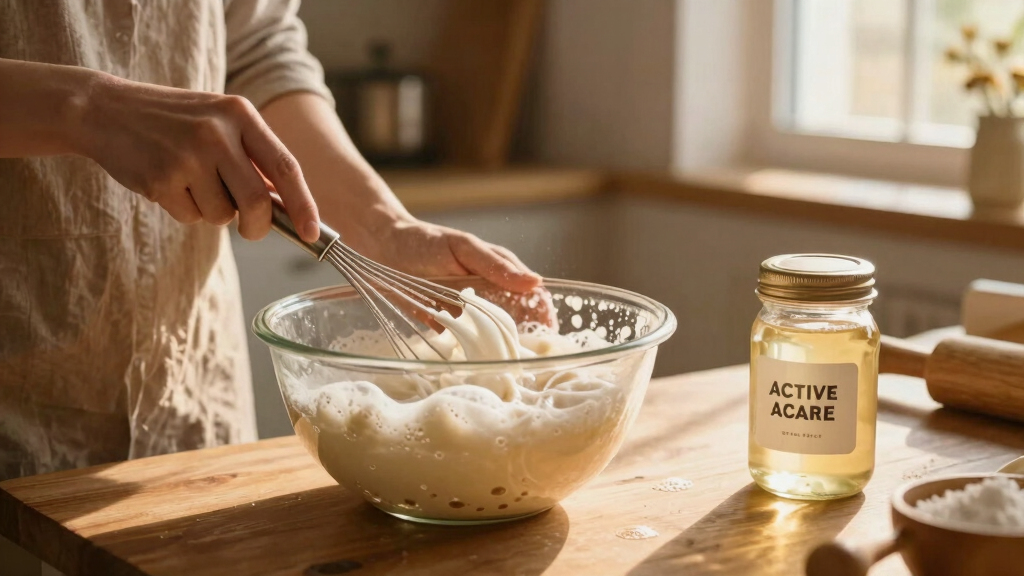
When you activate yeast in warm water with a bit of sugar, the yeast begins consuming the sugar, producing bubbles of carbon dioxide. This slow process not only causes the dough to rise but also allows enzymes to break down starches into simpler sugars, enriching flavor and creating a chewy, hearty crumb. The longer fermentation times—like in sourdough or artisan bread—build layers of flavor and improve digestibility. The tradeoff is time: while yeast imparts great depth, it requires patience and precise temperature control to prevent under- or over-fermentation, which can affect both rise and taste.
Mastering yeast fermentation means understanding these nuances—how to feed the yeast, control temperature, and extend fermentation when needed. These factors influence not only the rise but also the complexity and richness of your baked goods, making yeast an invaluable tool for artisans and home bakers alike.
Baking soda: The quick-reacting leavening hero
Baking soda, or sodium bicarbonate, is a chemical leavening agent that reacts instantly when it encounters acids. Its rapid reaction creates carbon dioxide almost immediately upon mixing, which means it’s ideal for recipes that don’t require long fermentation times. The speed of this reaction is both a strength and a limitation: it provides quick leavening but demands precise timing and ingredient balance to prevent issues.
For example, adding baking soda to buttermilk biscuits or chocolate chip cookies produces an immediate fizz that helps the dough or batter rise quickly. This quick gas release is crucial because it sets the structure early in baking, trapping the gas and creating a tender crumb. However, if the reaction occurs before baking—say, if the batter sits too long—the gases escape, resulting in less rise and a denser texture.
The tradeoff with baking soda is that it can impart a bitter, metallic taste if overused or if the acid balance isn’t correct. This can also affect the overall flavor profile, sometimes masking subtle tastes or creating off-flavors. Therefore, understanding the chemistry behind baking soda’s reaction helps bakers tweak recipes for optimal rise and flavor, especially in quick breads, cookies, and pancakes.
Frequently Asked Questions
How can I tell if my baking soda or baking powder is still active?
To test baking soda, mix a teaspoon with a few drops of vinegar—if it fizzes vigorously, it’s good. For baking powder, stir a teaspoon into hot water—if it bubbles actively, it’s still potent. Replace if no reaction occurs to ensure your baked goods rise properly.
Can I substitute baking soda for baking powder in a recipe?
Not directly. Baking soda needs an acid to react, while baking powder contains its own acids. If you must substitute, add a small amount of acid (like vinegar) to activate baking soda, but it’s easier to stick to the original leavening agent for best results.
Why does my bread not rise properly even with yeast?
Common causes include expired yeast, incorrect temperature (too cold or too hot), or not enough fermentation time. Make sure your yeast is fresh, warm the liquids to about 105–115°F, and give the dough enough time to proof for a good rise.
Are natural leavening agents healthier than chemical ones?
Many prefer natural options like yeast or fermentation-based leaveners for their minimal processing and added flavor complexity. While chemical leaveners are generally safe when used properly, natural options often fit better into a clean-eating approach.
How do I store my leavening agents to keep them fresh?
Store baking soda and baking powder in airtight containers in a cool, dry place. Check expiration dates regularly, and perform simple tests to ensure they’re active before baking to avoid flat results.
Conclusion
Understanding what makes baked goods rise isn’t just about following recipes—it’s about mastering the tiny chemistry behind every fluffy crumb. When you pick the right leavening agent and use it correctly, you turn simple ingredients into something magical. Every rise is a small victory, a testament to the power of science in your kitchen.
Next time you bake, think of those microscopic gases working tirelessly inside your batter. With this knowledge, you’re ready to create lighter, tastier treats that impress every time.