
TL;DR
Active dry, instant, and fresh yeast each have unique traits. Choosing the right one depends on your recipe, timing, and flavor preferences. Proper storage and proofing ensure your bread rises beautifully.
Yeast is the secret ingredient behind those fluffy loaves, tender rolls, and crusty breads we love. Yet, if you’ve ever stared at a shelf of yeasts and felt overwhelmed, you’re not alone. Active dry, instant, and fresh yeast all do the same job—leavening dough—but each has its quirks, benefits, and best uses.
Getting a handle on these differences can save you time, frustration, and even money. Whether you’re baking a weekend sourdough, perfecting pizza dough, or just experimenting with bread, knowing which yeast to grab makes all the difference.
Active dry yeast needs proofing in warm water before use, while instant yeast can be mixed directly into dry ingredients.
Fresh yeast offers superior flavor but requires quick use and proper refrigeration.
Reduce instant yeast quantity by about 25% when substituting for active dry yeast.
Store yeast in a cool, dry place; once opened, refrigerate or freeze to maximize shelf life.
Proofing yeast is the easiest way to check if it’s still active before baking.
Active Dry Yeast: The Classic Workhorse That Needs a Wake-Up Call
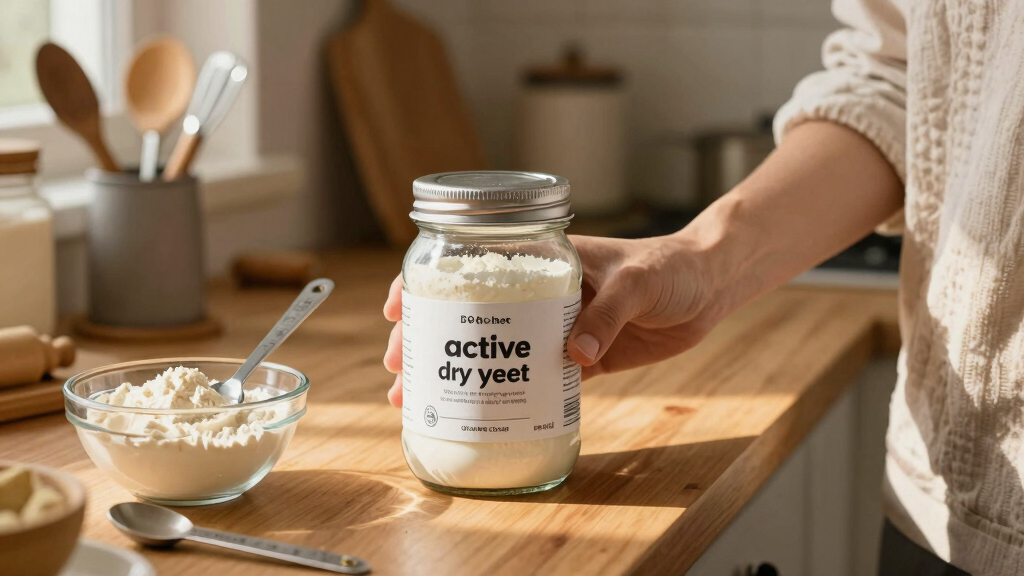
Active dry yeast is the most widely available type, with granules that need a little warm water and sugar to get going. Think of it as the ‘sleepy’ yeast—dormant until you ‘wake’ it up. When activated properly, it bubbles and froths, signaling life.
For example, if you’re making a basic white bread, proof your active dry yeast by dissolving 2 teaspoons in 1/4 cup warm water (around 110°F) with a pinch of sugar. Wait 5-10 minutes. If it foams, you’re good to go. If not, it’s time to get fresh yeast or check your water temperature.
Active dry yeast typically lasts 1-2 years when stored in a cool, dry place. Once opened, keep it in an airtight container in the fridge or freezer. This long shelf life makes it a trusty choice for bulk baking. Its need for proofing isn’t just about activation; it also acts as a quality check—if it doesn’t foam, your yeast might be dead, leading to flat bread and wasted ingredients. Proper storage ensures the yeast remains viable, but over time, even stored yeast can lose potency, so frequent testing is wise for best results.
As an affiliate, we earn on qualifying purchases.
Instant Yeast: The Convenient Power Player for Faster Bakes
Instant yeast, also called rapid-rise or bread machine yeast, is finely milled and dormant, but it dissolves directly into dry ingredients. No proofing needed. Just add it straight to your flour and other dry ingredients.
Imagine you’re making pizza dough on a weeknight. Toss in 2 teaspoons of instant yeast with your flour, salt, and water. Mix, knead, and you could be baking in as little as an hour—thanks to its quicker activity. This speed is especially advantageous when time is tight, but it also means less control over fermentation stages, which can sometimes affect flavor development.
Because it’s more concentrated than active dry yeast, you can usually reduce the amount by about 25% when substituting. This reduction helps prevent over-proofing and dough over-expansion, which can lead to a coarse crumb. Store it in a cool, dry place—once opened, keep it airtight in the fridge or freezer for maximum longevity. Its convenience doesn’t just save time; it also simplifies the baking process, making it ideal for beginners or quick recipes. However, because it dissolves so readily, it may produce slightly different fermentation characteristics, which can subtly influence the bread’s texture and flavor.

SAF Instant Yeast Red for Baking Cake, Bread and Dough, 1 Pound (1 Pack)
- Fermentation Performance: Fast and efficient fermentation
- Versatile Use: Suitable for all bread types
- Climate Resilient: Works in extreme conditions
As an affiliate, we earn on qualifying purchases.
As an affiliate, we earn on qualifying purchases.
Fresh Yeast: The Baker’s Favorite for Flavor and Aroma
Fresh yeast, also called cake or compressed yeast, is moist, crumbly, and needs to be dissolved in water before adding to dough. It’s the kind most bakery pros keep on hand for its rich, yeasty aroma and flavor that’s hard to beat.
Suppose you’re baking a sourdough loaf. Crumble about 0.6 ounces of fresh yeast into warm water with a pinch of sugar. Wait 5-8 minutes until it’s frothy. Then mix into your flour and let it rise. Its short shelf life—roughly 2 weeks refrigerated—means you’ll buy it fresh and use it quickly.
Many bakers prefer fresh yeast for its superior flavor because the active fermentation process produces more aromatic compounds, resulting in a more complex and nuanced bread profile. The moist texture helps it dissolve quickly and evenly, promoting a consistent rise. However, its perishability requires careful storage—refrigerate immediately after purchase and bring to room temperature before use to ensure optimal activity. The tradeoff is convenience; while fresh yeast offers unmatched flavor, it demands more immediate use and precise handling, making it less suitable for spontaneous baking or for those who prefer long-term pantry storage.
As an affiliate, we earn on qualifying purchases.
Yeast Tech & Trends: What’s New in the World of Leavening
Recent innovations focus on extending shelf life, improving flavor, and making baking more sustainable. Packaging innovations now protect dried yeasts from moisture and oxygen, keeping them fresher longer.
Organic and specialty yeasts are booming, catering to health-conscious bakers. Plus, ongoing research into yeast strains aims to enhance fermentation, flavor complexity, and even gluten-free options. For example, some brewers are developing yeasts that produce less alcohol or more aromatic compounds, which could influence baking in the future.
These advancements mean better reliability, taste, and variety for home bakers and professionals alike. The ongoing evolution of yeast technology underscores its importance in achieving specific flavors, textures, and nutritional profiles, giving bakers more tools and options to craft unique baked goods.
As an affiliate, we earn on qualifying purchases.
Quick Tips for Using Yeast Like a Pro
- Always proof active dry yeast if you’re unsure about its freshness. Look for bubbling within 10 minutes.
- Use the right amount: Reduce instant yeast by 25% when substituting for active dry.
- Store yeast properly: Keep unopened in a cool, dry place; once opened, refrigerate or freeze.
- Watch water temperature: Too hot can kill yeast; too cold slows fermentation.
- Trust your nose: Fresh yeast has a strong, yeasty aroma, while older yeast loses potency.
Your Yeast Questions, Answered
Q1: How do I tell if my yeast is still good?
Proof it by dissolving a small amount in warm water with sugar. If it bubbles within 10 minutes, it’s alive and active.
Q2: Can I swap one type of yeast for another?
Yes, but expect adjustments in quantity and proofing. Usually, reduce instant yeast by 25% when substituting for active dry.
Q3: Is fresh yeast better for flavor?
Many bakers say yes—fresh yeast provides a richer aroma, but dried yeasts are more convenient and longer-lasting.
Q4: How should I store yeast?
Keep unopened yeast in a cool, dry place. Once opened, refrigerate or freeze it to extend its life.
Q5: Are there gluten-free yeasts?
Yes, some yeasts are derived from non-gluten sources, suitable for gluten-free baking.
Conclusion
Mastering the differences between yeast types can elevate your baking game. Whether you choose the convenience of instant yeast or the flavor depth of fresh yeast, knowing when and how to use each makes a real difference.
Next time you’re baking, pay attention to your yeast. It’s the tiny powerhouse that transforms simple dough into bread that rises with pride—and flavor.