
TL;DR

Get baking supplies delivered free with Prime
- Fast, free delivery on millions of items
- Prime Video, Amazon Music and more included
- Member-only deals all year
Active dry, instant, and fresh yeast each have unique traits affecting how they ferment and rise. Knowing these differences helps you pick the right yeast for your recipe, resulting in better, more reliable baked goods.
Yeast is the tiny hero behind fluffy bread, airy rolls, and crusty loaves. But when you step into the baking aisle, the labels—active dry, instant, fresh—can feel like a foreign language. What’s the real difference? And which one should you pick for your next bake?
This guide cuts through the confusing jargon, giving you clear, practical insights. Whether you’re a home baker or just curious, understanding these yeast types helps you get consistent, delicious results every time.
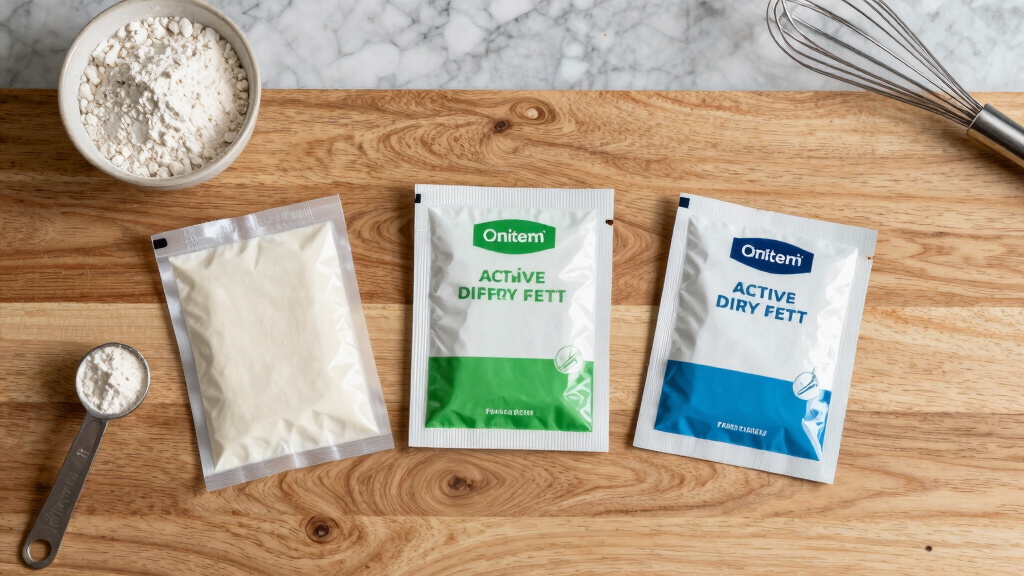
Active dry yeast requires proofing in warm water before use, while instant yeast can be added directly to dry ingredients.
Fresh yeast offers a rich flavor but has a short shelf life and needs careful storage in the fridge.
You can substitute active dry with instant yeast by reducing the amount slightly; both have similar shelf lives when stored properly.
Temperature control is critical: too hot kills yeast, too cold slows fermentation—keep it between 105–110°F.
Recent advances have made dry yeasts more shelf-stable and flavor-rich, broadening your baking options.
What is Active Dry Yeast and Why It’s Still a Kitchen Staple
Active dry yeast is the classic, dried granules that most bakers have used for decades. It’s made by dehydrating yeast cells into coarse grains. To use it effectively, you need to dissolve (or ‘proof’) it in warm water—around 105–110°F (40–43°C)—until it bubbles and foams. That foaming signifies the yeast is alive and active.
Imagine baking a rustic sourdough loaf. You mix active dry yeast with water and sugar, waiting about 10 minutes. When the mixture froths, you’re ready to knead the dough. Its long shelf life—up to two years—makes it a reliable choice for pantry storage. Just keep it in a cool, dry place.
Despite newer options, active dry yeast remains popular because of its affordability, straightforward handling, and proven reliability.
Products Worth Considering

Instant Pot InstantChill Ice Cream Maker with Rolled Ice Cream Cold Plate, 2-Pint

Instant Pot Duo Crisp Ultimate 6.5-Quart 13-in-1 Pressure Cooker and Air Fryer

Cuisinart SM-50R 5.5-Quart Stand Mixer, Ruby Red
As an affiliate, we earn on qualifying purchases.
Why Instant Yeast Is Your Fast-Track to Perfect Bread
Instant yeast, also called rapid-rise or quick-rise yeast, is a finer, more processed form of dried yeast. It’s designed to be added directly to dry ingredients—no proofing needed. That means less prep time and fewer steps. Just mix it in with the flour, and it starts working immediately.
Picture making a quick pizza dough on a weeknight. You toss all ingredients together, including instant yeast, knead briefly, and let it rise. The result is a lighter, fluffier crust in about half the time of traditional methods.
Its shelf life matches active dry yeast—up to 2 years when stored properly—and it’s favored by bakers who want speed without sacrificing quality.
Fresh Yeast: The Moist, Professional Choice
Fresh yeast, or cake yeast, is a soft, moist block that looks like a tiny cake. It’s the original form of yeast used in bakeries for centuries. To use it, you crumble a small piece and dissolve it in warm water, just like with active dry yeast. It tends to have a more delicate, complex flavor, loved by professional bakers.
Think of making a traditional Italian bread. You break off a chunk of fresh yeast, mix it with warm water, and let it activate before combining with flour. Its short shelf life—usually about two weeks refrigerated—means it’s less convenient for home use but prized for its rich, slightly tangy taste and soft texture.
Many bakers find that fresh yeast produces a more nuanced flavor in their bread, especially in sourdough or artisanal recipes.
The Latest Yeast Tech: Longer Shelf Life and Better Flavors
Yeast technology has come a long way. Modern packaging and dehydration processes have extended shelf life for dry yeasts—some now last over two years in your pantry. Organic and non-GMO options are increasing, aligning with health-conscious bakers.
Innovations also include specialty yeasts that add unique flavors, like sourdough strains or craft-beer yeasts. Plus, yeast cultures tailored for gluten-free or low-sugar baking are expanding options for dietary needs.
These advances mean more reliable, flavorful, and versatile yeasts, making baking more accessible and exciting.
The Key Facts You Need to Know to Use Yeast Properly
- Conversion ratios: 1 packet (about 2 ¼ teaspoons) active dry yeast equals roughly 2 ¼ teaspoons instant yeast. When substituting, reduce the amount of active dry by 25% for best results.
- Temperature matters: Yeast thrives between 105–110°F. Too hot (>120°F) kills it; too cold slows fermentation.
- Storage: Keep yeast in an airtight container in a cool, dark place. Refrigerate or freeze for longer shelf life.
- Fresh yeast: Short shelf life—use within 2 weeks refrigerated, crumbles easily, and needs quick use.
Your Burning Questions About Yeast—Answered
Q1: Can I swap active dry yeast for instant yeast?
Yes. Use about 25% less instant yeast because it’s more potent. No need to proof—just add it directly to dry ingredients.
Q2: How do I test if my yeast is still active?
Mix a teaspoon of yeast with warm water and a pinch of sugar. If it bubbles and foams within 5–10 minutes, it’s good to go.
Q3: Which yeast is best for quick bread recipes?
Instant yeast is ideal—faster rising, no proofing, and reliable results in recipes like pizza dough or quick buns.
Q4: How should I store fresh yeast?
Wrap tightly, keep refrigerated, and use within 2 weeks for the best flavor and activity.
Q5: Are there health benefits to using yeast?
Yeast provides B vitamins, protein, and minerals. Some strains even support gut health, making it more than just an ingredient.
Conclusion
Knowing the differences between active dry, instant, and fresh yeast transforms your baking. It’s not just about following a recipe—it’s about understanding how each type behaves and what it brings to your bread.
Next time you bake, pick your yeast with confidence. Your loaf will thank you for it—crisp, airy, and bursting with flavor. Happy baking!