TL;DR

Get baking supplies delivered free with Prime
- Fast, free delivery on millions of items
- Prime Video, Amazon Music and more included
- Member-only deals all year
A food processor is often treated as a chopping appliance, but it can also cut butter into flour, make crumbs, grind nuts, and bring some doughs together. Use short pulses, cold ingredients, and visual cues to stop before pastry warms or dough turns tough. It helps with many small baking jobs, though a mixer remains better for creaming butter and sugar or whipping.
A food processor can take pie dough from a pile of flour and cold butter to coarse crumbs in a handful of pulses. That same speed can turn a promising crust into a warm, smooth paste if you keep going. The blade’s hidden value in baking is control over small prep jobs, provided you watch what is happening in the bowl.
This guide shows you where a processor helps, where a mixer does a better job, and how to spot the moment to stop. You’ll see how to handle pastry, crumbs, nuts, and fillings, with practical cues you can use even when your appliance has a stronger motor than the recipe writer’s. The goal is simpler prep and better texture, not another gadget you have to use for everything.
Pulse cold butter and flour only until coarse crumbs form, with some butter pieces still visible.
Add cold liquid gradually and stop pastry processing when the mixture just begins to clump; finish by hand.
Use short pulses for nuts, oats, dates, and chocolate to prevent them from turning into paste.
Choose a mixer for recipes that rely on creaming butter and sugar or whipping ingredients.
Check your appliance manual for dough capacity, attachments, and supported uses, then clean the bowl and blade promptly.
The Food Processor’s Hidden Role in Baking
A food processor can simplify small baking prep jobs, from pastry crumbs to chopped nuts. Short pulses and visual checks help protect texture.
Where the processor helps
Use it for quick, even prep where brief cutting or blending does the job.
Cut cold butter into flour
Pulse until coarse crumbs form, with a few butter pieces still visible.
Make crusts quickly
Turn cookies, crackers, or bread into crumbs and mix with melted butter.
Chop or grind
Use short bursts for nuts, oats, dates, chocolate, and dried fruit.
A visual guide to pie dough
Check the mixture as you go; appearance matters more than a fixed processing time.
Stop at coarse crumbs with a few butter pieces still visible.
Pulse between additions until some crumbs just begin to clump.
Gently press the dough together, then chill according to the recipe.
Choose the right tool
A processor is useful for some mixtures, but it does not replace every mixer task.
- Pastry crumbs and dough that just begins to clump
- Cookie crumbs, chopped add-ins, and some fillings
- Small, repetitive prep tasks
- Creaming butter and sugar until light and airy
- Whipping ingredients
- Recipes that depend on incorporating air
Small details shape the result
The blade, bowl size, batch quantity, and motor power affect how quickly ingredients process.
- Open the lid and inspect texture instead of relying on a timer.
- Stop and scrape the bowl if ingredients gather at the sides.
- Clean the bowl and blade promptly after sticky or oily ingredients.
Use the processor for the baking jobs it handles best
A food processor is a fast, controlled tool for repetitive baking prep: cutting fat into flour, making crumbs, chopping add-ins, and blending some fillings. Its short pulses give you a chance to check texture as you go, which matters because a few extra seconds can change coarse crumbs into paste. For example, you can make a cookie crust for a cheesecake without crushing each biscuit by hand.
The standard chopping blade handles many of these jobs, though your machine may include a dough blade or other attachments. Bowl size matters too. A small amount of oats in a large bowl may skate around above the blade instead of grinding evenly, while a powerful motor can chop nuts faster than you expect. Follow the appliance manual, keep within its capacity, and stop to scrape the bowl if ingredients gather at the sides.
Think of the processor as a prep partner for work that benefits from even, quick cutting. It can chop dates for a loaf, grind oats for a finer texture, and mix crumbs with melted butter for a tart shell. That flexibility helps explain why it is often treated as a chopping appliance even though it can also handle several useful baking tasks.
- Best for: pastry crumbs, cookie crusts, chopped nuts, and small batches of fillings.
- Check first: the blade, bowl capacity, and quantity the recipe requires.
- Stop often: open the lid and inspect the texture instead of relying on a fixed time.
The machine’s versatility comes from the same blade doing many kinds of work. Your job is to match its speed to the ingredient: brief pulses for butter and nuts, careful blending for fillings, and no assumption that every dough belongs in the bowl.
Products Worth Considering

Vitamix 5200 Professional-Grade Blender, 64 oz. Container, Black

Cuisinart Chef's Classic 17-Piece Stainless Steel Cookware Set

KitchenAid Artisan 5-Quart Tilt-Head Stand Mixer, Almond Cream
As an affiliate, we earn on qualifying purchases.
Keep butter visible if you want flaky pastry
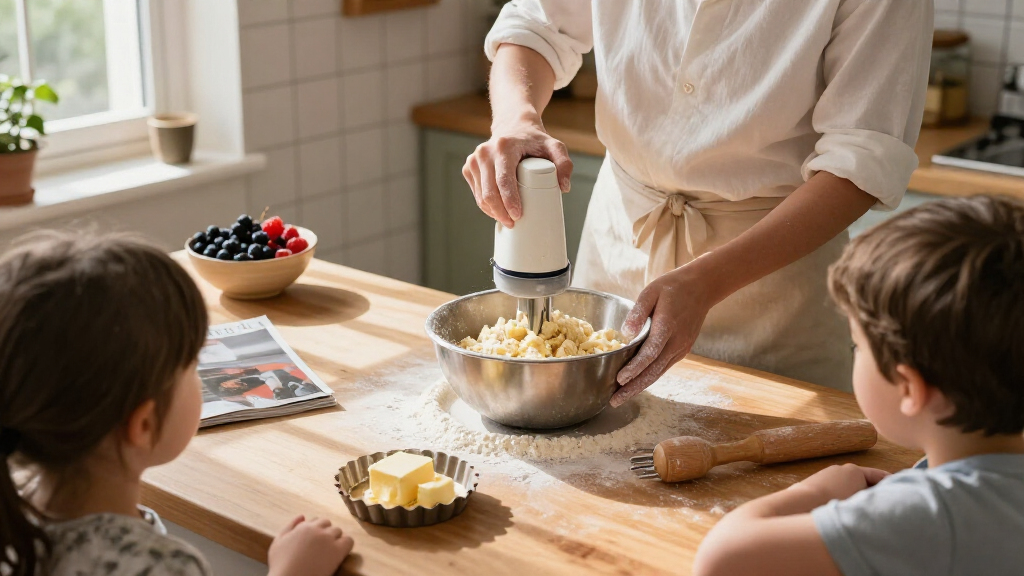
The food processor’s hidden role in baking is especially useful when you need to cut cold fat into flour for pie crust, biscuits, or scones. Pulse the flour and cubed butter until the mixture looks like coarse crumbs, with a few small butter pieces still visible. Those pieces help create layers as the pastry bakes, while processing until everything looks uniform can leave you with a less tender result.
For a double-crust pie, measure the flour and salt into the bowl, add cold butter cubes, and pulse briefly. Check the mixture after a few pulses. When it resembles damp sand with pea-sized pieces scattered through it, begin adding cold water a spoonful at a time. The exact number of pulses depends on your motor, blade, and batch size, so appearance gives you a better guide than a timer.
Cold ingredients help keep the butter firm while you work. If your kitchen is warm or the butter starts to look glossy, pause and chill the bowl or mixture before continuing. Do not use frozen butter without checking the recipe: very hard chunks can be difficult to distribute evenly. A processor can make this step quick, but speed is only useful when you preserve those little bits of fat.
For flaky pastry, stop before it looks smooth. Visible butter pieces and a mixture that still feels crumbly are useful signs that you have not processed away the texture you want.
Consider a Saturday apple pie: the processor takes seconds to combine flour and butter, then your hands gently gather the dough. That short hand finish keeps you in control and limits heat from the motor. Wrap and chill the dough before rolling, following the recipe’s timing, so the butter firms again and the dough becomes easier to handle.
Bring pie dough together without making it tough
A processor can bring flour, fat, and liquid together quickly, but pastry should stop just as the dough begins to clump. Add cold liquid gradually and pulse between additions; when some crumbs start to gather into larger pieces, tip them onto the counter and finish pressing them together by hand. Processing until the dough forms a smooth ball can build too much structure and make the baked crust tough.
Here is a simple sequence for a basic pie dough:
- Pulse flour and cold cubed butter until coarse crumbs form, leaving a few visible butter pieces.
- Add cold water a little at a time. Pulse just enough for some of the mixture to clump when pinched.
- Tip the crumbs onto a clean work surface. Press them together gently; add a few drops of water only if they remain dry and separate.
- Shape into a disc, wrap, and chill according to the recipe before rolling.
A typical home baker might find the dough looks loose in the bowl and assume something has gone wrong. Test a pinch between your fingers first. If it holds together, transfer it to the counter; the dough does not need to look like a neat ball inside the processor. If it falls apart completely, add a small amount of cold water and pulse once or twice, then check again.
Warmth can be as troublesome as overmixing. A hot kitchen, warm butter, or extended processing can soften the fat before the dough reaches the oven. The processor is a shortcut for bringing ingredients together, not a reason to skip chilling or the recipe’s resting time. Minimal handling and a cool dough give you a better shot at tender pastry.
Know when a mixer gives you a better cake
A food processor can combine some dense batters, but it often does a weaker job of creaming butter and sugar or whipping ingredients. Creaming means beating softened butter and sugar until the mixture becomes lighter and holds more air, a step that can affect the texture of many cakes and cookies. If a recipe depends on that light, fluffy base, a hand mixer or stand mixer is usually the better choice.
Imagine making a birthday sponge cake. The recipe asks you to beat butter and sugar until pale and airy, then add eggs one at a time. A processor may blend those ingredients quickly, but the result can be dense if it does not incorporate enough air. By contrast, a processor may suit a thick date-and-oat mixture or a dense batter that the recipe specifically says to pulse together.
Use the machine for its strengths and let the recipe’s method guide you. A processor can make crumbs for a base, chop chocolate for a cookie dough, or mix a compact filling. A mixer is more suitable when you need a fluffy mixture or aerated egg whites. If you only have a processor, choose a recipe designed for it rather than assuming every mixer instruction translates directly.
| Task | Food processor | Mixer |
|---|---|---|
| Pie dough and crumb crusts | Quick, even cutting and mixing | Usually more handling than needed |
| Chopping nuts or chocolate | Useful with short pulses | Not generally the right tool |
| Creaming butter and sugar | May combine, but often adds less air | Usually the stronger option |
| Whipping ingredients | Not a general substitute | Use a mixer with the right attachment |
The tradeoff is straightforward: a processor is a helpful baking tool, but it does not replace every mixer or kneading method. A home baker who makes pies every month may use it often; someone making sponge cakes may still reach for a mixer first.
Pulse nuts, oats, and chocolate before they turn to paste
A food processor makes quick work of nuts, oats, chocolate, dates, and dried fruit for batters, toppings, and fillings. Use short pulses and check after each burst so you stop at the size you need. Continuous processing can release nut oils and turn pieces into butter; a handful of almonds can go from chopped to sticky much faster than many people expect.
For a crumble topping, pulse oats and nuts just until the pieces are smaller but still visible, then stir them with flour and the other ingredients. If you are making a date loaf, chop the dates briefly rather than running the machine until they form a dense lump around the blade. Small batches can be hard to process evenly in a large bowl, so pause to scrape down the sides or use a suitable smaller attachment if your model includes one.
Texture affects how an ingredient behaves in a recipe. Fine ground oats can make a batter feel denser than rolled oats, and large nut pieces can add crunch but may sink in a loose mixture. For brownies, a few pulses can turn chocolate chunks into a mix of shavings and small pieces that melt into the batter. Stop before the shavings collect into warm clumps.
That same judgment helps with cutting fat into flour: look, pulse, inspect, and stop at the right texture. Avoid using a fixed processing time as your only rule, because machine power and ingredient quantities differ. If you are preparing several ingredients in a row, clean the bowl and blade promptly; nut oils, sticky fruit, and melted chocolate become harder to remove when they dry or cool.
- For chopped nuts: pulse in brief bursts and stop while pieces are distinct.
- For ground oats: check often so you do not grind finer than the recipe needs.
- For sticky fruit: use short bursts and separate clumps by hand if needed.
When a recipe needs a topping with crunch, a few uneven pieces often work better than a uniform powder. Let the final texture, not the machine’s speed, decide when to stop.
Make even crumbs and fillings with less mess
A food processor turns cookies, crackers, or bread into even crumbs and can mix them with melted butter for a crust. That makes it useful when you want a compact base for cheesecake or a tart, with fewer large pieces that leave gaps. Pulse the dry ingredient first, check the crumb size, then add melted butter and pulse only until the mixture looks evenly moistened.
For example, if you are making a biscuit crust for a weekend cheesecake, stop when the crumbs resemble damp sand and hold together when pressed. If you keep processing after adding butter, the mixture can become greasy or pack too tightly into the pan. Press it into the tin with the bottom of a glass, then follow the recipe’s baking or chilling instructions. The processor handles the prep; your eyes and fingers tell you when the crumbs are ready.
The bowl can also blend fruit, nuts, or cheese into fillings and spreads. A fruit filling may need only a few pulses to break down larger pieces, while a nut filling can quickly go from coarse to smooth. Watch for moisture: juicy fruit can make a filling thin, and some recipes need a thickener or draining step to keep the crust from turning soggy. Use the recipe’s directions rather than adding ingredients by guesswork.
Food safety still applies to processor-made fillings. Wash hands and equipment after handling ingredients that need refrigeration, keep perishable fillings chilled, and follow the recipe’s storage guidance. If a filling contains dairy or eggs, do not leave it sitting at room temperature for extended periods; refrigerate leftovers promptly. The processor does not change those basic handling rules.
For a practical example, a savory vegetable tart might use a processor to chop herbs and blend a cheese filling, while the vegetables are cooked and cooled separately. Keeping each component’s texture in view makes assembly easier. Clean the bowl and blade soon after use, especially if sticky dough, nut oils, or chocolate has coated them.
Decide whether a processor fits the way you bake
A food processor is most useful when you regularly make pastry, crumb crusts, nut-based recipes, or batches that call for repetitive chopping and grinding. It can save time on those jobs, but it may not earn counter space if you bake occasionally and already have a pastry cutter, blender, or mixer that meets your needs. The right choice depends on what you make and how often you make it.
Suppose you bake a pie every few weeks and often make oat bars with chopped dates. A processor could simplify two recurring tasks. If you mostly bake simple cakes that start by creaming butter and sugar, a hand mixer may serve you better. You can also make many pie doughs with a pastry cutter or fingertips; the processor is a convenience, not a requirement.
Before using a machine you already own, read its manual for dough guidance and capacity limits. Some processors can handle certain bread doughs with a suitable blade, but dough can strain the motor, and models vary. Do not assume that a processor can knead any quantity just because the blade spins. Use only quantities the manufacturer supports, and stop if the machine struggles or the manual rules the task out.
There is no need to buy extra accessories unless your baking calls for them. Start with the standard blade and the recipes you already make. If a small batch does not reach the blade, process a larger suitable quantity or finish it by hand. For a household that makes one pie at Thanksgiving, a pastry cutter and a bowl may be enough; for frequent tart and crumb-crust baking, the processor’s speed can add up to a practical convenience.
Think back to the apple pie dough: the machine did the repetitive cutting, then your hands brought it together and the refrigerator did the chilling. That division of work is the processor’s best role in baking. It handles quick, even prep while you stay responsible for texture, temperature, and the recipe’s final cues.
Frequently Asked Questions
Can I use a food processor instead of a stand mixer?
Sometimes. A processor is useful for pastry, crumbs, chopped ingredients, and some dense mixtures, while a stand or hand mixer is usually better for creaming butter and sugar or whipping. Follow the recipe’s method when air and volume matter to the result.
How do I make pie dough in a food processor?
Pulse flour and cold cubed butter until coarse crumbs form, then add cold liquid gradually. Stop when some of the mixture begins to clump when pinched, bring it together gently by hand, and chill it according to the recipe before rolling.
Will a food processor make pastry tough?
It can if you process too long, warm the ingredients, or work the dough until it becomes smooth and elastic. Use short pulses, keep ingredients cold, and stop as soon as the dough starts to gather.
Can a food processor knead bread dough?
Some models support certain bread doughs with a suitable blade, but capacity and instructions vary. Check the manual and use only supported quantities, since dough can strain the motor.
Why do my nuts turn into butter in the processor?
Continuous processing releases the nuts’ oils and turns chopped pieces into a paste. Pulse briefly, check often, and stop when the pieces reach the size your recipe needs.
Can I cream butter and sugar in a food processor?
A processor may combine them, but it often incorporates less air than a stand mixer or hand mixer. For a cake or cookie recipe that relies on a light, fluffy creamed mixture, use the mixer method if you can.
Conclusion
Use your food processor for the baking steps that need quick, even prep: coarse pastry crumbs, cookie crusts, chopped add-ins, and some fillings. Keep ingredients cold where the recipe calls for it, pulse in short bursts, and stop when the mixture reaches the texture you want. For airy cakes and whipped mixtures, choose a mixer that can do that job well.
The blade is fast; your eyes are the better timer. Keep a few butter flecks in the dough, and they may become the delicate layers that make a slice of pie worth slowing down for.