TL;DR
The toothpick test works well for cakes but is limited for other foods. Using a digital thermometer, visual signs, and touch improves accuracy. Combining methods guarantees perfectly cooked results every time.
Ever pulled out a toothpick from your cake and hoped for the best? That simple stick has been a go-to for decades, but it’s far from foolproof. You’ve probably experienced the disappointment of a gooey center or a dry, crumbly edge. The good news? There are smarter, more reliable ways to know when your food hits that perfect doneness.
In this guide, you’ll learn why the toothpick test isn’t always enough and explore practical alternatives. From digital thermometers to visual clues, I’ll show you how to get consistent results without guesswork—saving you time, frustration, and excess baking.
The toothpick test is useful mainly for cakes and muffins but can be misleading for denser baked goods or meats.
A digital thermometer provides the most accurate way to know when food is fully cooked, especially for meats and large baked items.
Visual cues like color, crust separation, and surface elasticity are reliable indicators when combined with other methods.
Modern tools like infrared and smart thermometers save time and improve accuracy, making cooking more predictable.
Using multiple methods together dramatically reduces the risk of under- or overcooking—aim for a layered approach.
The Toothpick Test and Better Ways to Know When It’s Done
The toothpick test is useful for cakes and muffins, but it is only one signal. For dense bakes, meat, and filled foods, combine temperature, visual cues, touch, and timing to avoid gooey centers, dry edges, and unsafe guesswork.
One clean toothpick can still miss the truth in the center.
A clean stick is not a complete diagnosis.
The toothpick checks one narrow path through the food. It may miss a wet center, hit a cooked crumb, or say nothing about food safety. The denser the item, the less complete the signal becomes.
Dry crumb, wet core
A toothpick can pass through a set pocket while the center of banana bread or a loaf cake remains underbaked.
Meat needs heat data
Color and surface moisture do not confirm safe internal temperature, especially for poultry and roasts.
Timing drifts
Recipe minutes are only a guide because hot spots, pan material, and calibration change the finish line.
Move from guesswork to confirmation.
Better doneness checks stack fast sensory clues with one measurable anchor. Temperature tells you what happened inside; sight and touch tell you how the structure is behaving.
Check the center
Use an instant-read thermometer for large bakes, meat, and anything dense.
Read the surface
Golden crust, pan pullaway, clear juices, and set edges all add context.
Test the spring
A surface that bounces back is usually more set than one that dents.
Learn the oven
Use past results to shorten, extend, rotate, or shield future cooks.
Reliability rises when methods overlap.
No single cue covers every food. The most repeatable approach uses a thermometer as the anchor, then confirms texture and appearance before pulling food from heat.
Doneness signal strength
Temperature anchors
Which test belongs with which food?
The right tool depends on density, safety risk, and how much the surface reveals. Use the toothpick for light bakes, but reach for temperature when the inside matters most.
| Method | Best for | Cakes | Dense breads | Meats | Limit |
|---|---|---|---|---|---|
| Toothpick test | Cakes, muffins, quick checks | ✓ | ~ | ✗ | Samples one path, not full internal heat. |
| Digital thermometer | Meat, large bakes, dense loaves | ✓ | ✓ | ✓ | Requires a tool and a precise probe point. |
| Visual cues | Crust, edges, browning, juices | ✓ | ~ | ~ | Fast but subjective and affected by recipe color. |
| Touch test | Springback, surface set, texture | ✓ | ~ | ✗ | Improves with experience, weaker for safety. |
From cue to confident pull.
A smart doneness routine connects what you see, measure, and feel. Each cue narrows uncertainty until the final decision is based on evidence, not hope.
Is the toothpick test reliable for all baked goods?
No. It works best for cakes and muffins. For bread, filled bakes, or dense loaves, temperature and visual structure give a clearer answer.
What is the best way to tell if a cake is done?
Check for a golden surface, slight pan pullaway, springback, and an internal temperature near 200°F.
How do I know when meat is cooked properly?
Use a meat thermometer at the thickest point. Temperature is more reliable than color, juices, or surface browning.
Are new tools worth using?
Smart thermometers, infrared devices, and image-based tools can reduce guesswork, especially when consistency matters.
Why the Toothpick Test Can Mislead You
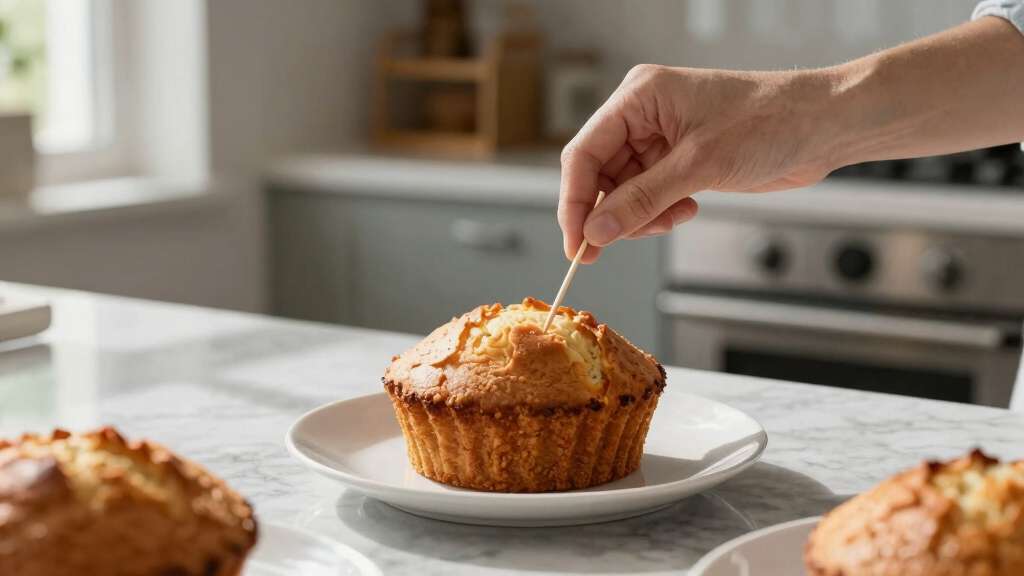
The toothpick test is simple: insert, pull out, and check for moist crumbs. But it’s not foolproof. Sometimes, a toothpick hits a moist crumb in a cake’s center, giving a false sense of completion. Other times, it misses the denser parts of bread or meat that need a higher internal temp.
Imagine baking a dense banana bread. The crust looks perfect, but the middle is still wet. Popping in a toothpick might tell you it’s done because parts of the center look dry. Yet, the core may still be undercooked. Relying solely on this test can lead to uneven results—either overbaking or serving underdone food.
Essentially, the toothpick is a quick gauge, but it doesn’t tell the whole story—especially for thicker, denser, or meat-based dishes. That’s why modern cooks turn to more precise methods. Understanding the limitations of the toothpick test helps you avoid common pitfalls like serving undercooked chicken or dry bread, which can compromise safety and texture. It’s about knowing when the moist crumb is a sign of doneness versus when the toothpick simply didn’t reach the interior’s true temperature or moisture level. The tradeoff here is between speed and accuracy—while the toothpick is quick, it sacrifices reliability for complex dishes where internal moisture and temperature are critical.
As an affiliate, we earn on qualifying purchases.
The Science Behind Proper Cooking and Doneness
Understanding what happens inside your food as it cooks is key to recognizing when it’s truly done. Heat causes proteins to denature, starches to gelatinize, and moisture to evaporate or redistribute. These changes affect texture, appearance, and safety.
In baked goods, a properly risen and firm structure indicates sufficient internal heat has been reached. For meats, color alone can be deceptive—poultry can turn white before reaching a safe temperature, and beef can be brown but still undercooked inside.
By grasping the science, you learn to interpret visual cues better. For example, a cake’s surface should be golden and firm, with a clean toothpick in some areas, but the real test is the internal temperature. Similarly, meats should reach specific temperatures to ensure safety and optimal texture. This understanding empowers you to move beyond guesswork and rely on measurable indicators, leading to more consistent results and safer meals.
As an affiliate, we earn on qualifying purchases.
The Best Ways to Know When Your Food Is Truly Done
Instead of relying solely on a toothpick, combine these proven techniques for foolproof results:
- Internal Temperature: Use a digital or instant-read thermometer to check for safety and doneness. For cakes, aim for 190°F–210°F. For meats, follow safety guidelines—like 165°F for chicken or 145°F for steak. This method is rooted in scientific accuracy; knowing the internal temperature ensures your food has reached the necessary heat to kill bacteria and achieve the desired texture. The tradeoff is that it requires an extra tool and a moment of patience, but the payoff is consistent, safe results.
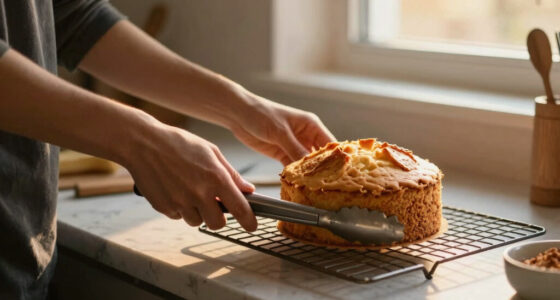
- Visual Cues: Look for a golden crust, pulling away from the pan, or a firm surface that springs back when touched. These signs indicate moisture loss and structural setting, which are crucial for baked goods. For meats, color and juices matter—pinks or reds might suggest they’re underdone unless the internal temperature confirms safety. Recognizing these cues helps you adapt on the fly, especially when timing isn’t precise due to oven variability. The implication is that visual cues are quick but subjective; combining them with temperature checks reduces guesswork and enhances reliability.
- Touch Test: Gently press the top. If it bounces back, it’s likely done. If it leaves an indentation, give it more time. This method leverages your sensory awareness—over time, you develop a feel for doneness. For example, a cake surface that springs back indicates proper setting, while a soft, indentable surface suggests it needs more baking. The tradeoff is that touch is subjective and varies with experience, so pairing it with other methods ensures consistent outcomes.
- Timing and Experience: Follow recipe guidelines, but trust your oven’s quirks. Adjust based on past results or oven calibration. This experiential knowledge is invaluable; understanding your equipment’s behavior helps you fine-tune cooking times. For instance, if your oven runs hot, you might reduce baking time. Recognizing these nuances prevents over- or undercooking, which is crucial for achieving the perfect texture and safety.
For instance, a batch of muffins may be perfectly baked at 20 minutes in your oven, but your friend’s oven runs hot. Using an instant-read thermometer or visual cues helps you adapt on the spot for perfect results. The key is understanding that no single method is foolproof; combining them provides a comprehensive picture of doneness, reducing guesswork and improving consistency.

Chef Craft Cake Tester
- Bakes Tester for Doneness: Checks if baked goods are ready
- Durable Stainless Steel Wire: 6-inch long, sturdy testing wire
- Soft Grip Handle: Comfortable, easy to hold
As an affiliate, we earn on qualifying purchases.
As an affiliate, we earn on qualifying purchases.
Frequently Asked Questions
Is the toothpick test reliable for all baked goods?
No, it works best for cakes and muffins. For bread or denser items, a thermometer or visual cues are more accurate because the toothpick may not reach the center or detect moisture properly.What’s the best way to tell if a cake is done?
Use a digital thermometer to check for an internal temp of around 200°F, look for a golden color, and press gently on the surface—if it springs back, it’s likely ready.How do I know when meat is cooked properly?
Use a meat thermometer to verify the internal temperature matches safety guidelines—165°F for poultry, 145°F for medium steak, etc. Visual cues like color and juices also help, but temperature is most reliable.Can I replace the toothpick with other tools?
Yes, a metal skewer or thin knife can work, especially for dense baked goods. For surface checks, infrared or smart thermometers are excellent alternatives. Keep in mind that each tool offers different insights—thermometers measure temperature, while skewers can test for moistness or structural integrity.Are there new tools that improve doneness detection?
Absolutely. Smart thermometers that connect to your phone, infrared devices for crusts, and even AI-powered apps that analyze images are emerging to help you get perfect results every time. These innovations provide real-time data and reduce guesswork, making cooking more precise and less stressful.As an affiliate, we earn on qualifying purchases.
Conclusion
Forget the toothpick as your sole cue. Embracing a combination of visual signs, temperature checks, and touch gives you control over your cooking. It’s about accuracy, consistency, and confidence—no more guessing games in your kitchen.
Next time you bake or roast, arm yourself with a digital thermometer and a keen eye. Your food will thank you with perfect texture, flavor, and safety every single time.