TL;DR

Get baking supplies delivered free with Prime
- Fast, free delivery on millions of items
- Prime Video, Amazon Music and more included
- Member-only deals all year
Frosting splits mainly due to ingredient imbalance, temperature shifts, or overmixing. Proper handling and storage can keep your frosting creamy and stable, avoiding cracks and curdling.
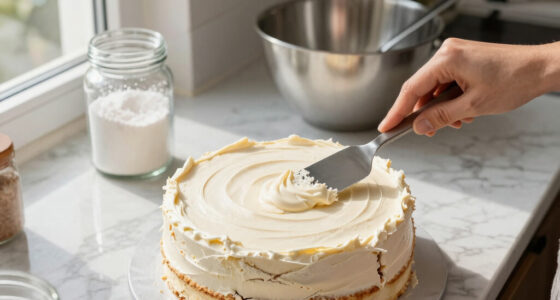
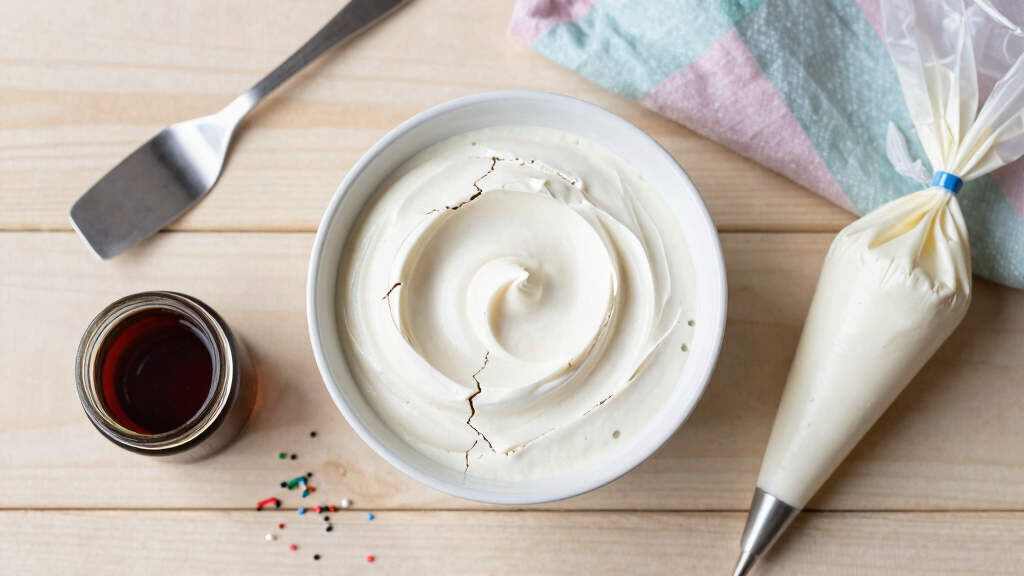
Ever had your perfect frosting turn into a grainy, split mess just as you’re about to decorate? It’s frustrating, especially after investing time and effort. Frosting splitting isn’t a mysterious flaw—it’s usually about simple issues we often overlook. Knowing what causes it can save you from wasting ingredients and ruining your cake.
In this guide, you’ll learn exactly why frosting splits, how to recognize the signs early, and practical steps to keep your frosting smooth, stable, and ready for decorating. Whether you’re a home baker or just starting out, these tips will make your frosting flawless every time.
Maintain the right fat-to-liquid ratio—too much liquid causes splitting, too little makes it stiff.
Use ingredients at room temperature for better emulsification and stability.
Gradually add liquids and avoid overmixing once the desired texture is achieved.
Store frosting in airtight containers and avoid temperature fluctuations during storage.
If frosting splits, gentle rewhipping or adding a splash of fresh liquid can often rescue it.
The Reason Your Frosting Keeps Splitting
Grainy, curdled or sliding frosting is rarely a mystery. Ingredient imbalance, temperature shifts and poor mixing disrupt the emulsion that holds fat, sugar and liquid together. Control those three variables and a silky finish becomes repeatable.
Professional bakers’ observations attribute 85% of frosting splits to an incorrect fat-to-liquid ratio.
Room-temperature ingredients emulsify more easily and spread with greater stability.
Observed splits linked to fat–liquid imbalance.
A practical room-temperature target.
Let chilled frosting soften before stirring.
Add milk or cream gradually, then mix gently.
Three forces break the emulsion
Frosting is a controlled suspension. When its ingredients, temperature or mixing energy move outside a stable range, fat and liquid stop behaving as one smooth system.
Too wet or too dry
Excess milk, juice or extract makes frosting runny and encourages separation. Too little liquid leaves it stiff, crumbly and difficult to spread.
Cold meets warm
Cold fat resists emulsification; warm fat softens and releases liquid. Sudden shifts and condensation can produce streaks, cracks or sliding.
Too much—or too little
Overmixing adds excess air and may destabilize fats. Undermixing leaves visible pockets of ingredients that separate during spreading.
Water hides in the butter
Lower-quality butter or watery margarine introduces extra moisture. Fresh, dependable fat creates a stronger and more predictable structure.
Fluctuation causes failure
Repeated warming and chilling weaken texture. Airtight storage at a consistent temperature protects the frosting from moisture and drying.
Watch the gloss
A dull, grainy, curdled or streaky appearance signals instability. Stop mixing and correct the temperature before the split becomes severe.
The stability dashboard
Ratio is the strongest observed risk factor, but temperature, technique and storage form the supporting system. Treat each one as a control point.
This figure reflects professional bakers’ observations, not a controlled clinical measurement.
Not every frosting fails the same way
Fat-rich frostings generally tolerate handling better than whipped cream, while cream cheese frosting is especially sensitive to excess mixing and warmth.
| Frosting type | General stability | Warm-room tolerance | Typical split trigger | Best safeguard |
|---|---|---|---|---|
| American buttercream | ✓High | ~Moderate | Excess liquid or overly soft butter | Add liquid by the teaspoon |
| Swiss / Italian buttercream | ✓High when emulsified | ~Moderate | Butter and meringue at different temperatures | Correct bowl temperature, then rewhip |
| Cream cheese frosting | ~Medium | ✗Low | Warmth, watery cheese or overmixing | Keep cool and mix briefly |
| Whipped cream | ✗Delicate | ✗Low | Heat, overwhipping or lack of stabilizer | Use gelatin or another suitable stabilizer |
| Fondant | ✓Structurally firm | ~Humidity-sensitive | Condensation or moisture imbalance | Control humidity and cake temperature |
Fix the batch before starting over
Move gently. The goal is to restore compatible temperatures and rebuild the emulsion without adding more air or flooding the mixture.
Stop and inspect
Grainy and stiff suggests cold fat. Glossy, loose and greasy suggests excess warmth or liquid.
Correct gently
Warm the bowl over warm—not hot—water if the fat is too cold. Chill briefly if the mixture is soupy.
Rewhip slowly
Use low or medium speed. If needed, add just 1 teaspoon of fresh milk or cream.
Know when to reset
If the structure remains greasy, watery or severely curdled after correction, begin a fresh batch.
The smooth-frosting chain
Reliable frosting comes from a connected sequence. Each stage protects the emulsion created in the stage before it.
Let refrigerated frosting sit for 15–20 minutes, then stir or rewhip gently until smooth.
Protect the cake from direct heat, humidity and abrupt moves between cold and warm environments.
Choose fresh butter, powdered sugar and recipe-appropriate stabilizers such as meringue powder or gelatin.
Once the frosting looks glossy, smooth and uniform, additional mixing creates risk rather than improvement.
Frosting failure FAQ
Most post-decoration problems trace back to environment, while most bowl-stage problems trace back to ratio, temperature or mixing.
Why does frosting split after the cake is decorated?
Temperature or humidity changes can soften the fat, create condensation and cause the frosting to slide, crack or separate.
Can split frosting be repaired on the cake?
Minor surface problems may be smoothed after gentle cooling. A severe split usually requires removing and repairing or replacing the frosting.
Can frosting be prepared ahead?
Yes. Store it airtight at a consistent temperature, allow a gradual return to room temperature and rewhip briefly before use.
Is buttercream more stable than whipped cream?
Generally, yes. Buttercream has a stronger fat-and-sugar structure; whipped cream is more delicate unless properly stabilized and chilled.
What Causes Frosting to Split? The Core Reasons You Need to Know
Frosting splits because of imbalance—either in ingredients or temperature. The most common culprits are too much liquid, improper mixing, or sudden temperature shifts. For example, if you add too much milk to buttercream, the fats can seize up or separate, turning a silky smooth texture into clumps or streaks.
Imagine working on a wedding cake, and just as you finish the final layer, the frosting begins to crack or slide off. That’s often because it’s been exposed to warm air or stored improperly. Recognizing these signs early helps you fix or prevent splitting before it ruins your decorating.
Products Worth Considering

Vitamix 5200 Professional-Grade Blender, 64 oz. Container, Black

Vitamix Propel Series 750 Professional-Grade Blender, 4 Programs, Black

Vitamix Propel Series 510 Professional-Grade Blender, 3 Programs, Black
As an affiliate, we earn on qualifying purchases.
How Ingredient Ratios and Quality Make or Break Your Frosting
Frosting stability hinges on precise ingredient ratios. Too much fat or sugar, or a wrong type of fat, can cause separation. For example, using low-quality butter with excess water content increases the chance of splitting. Similarly, too much liquid like milk or juice makes the frosting runny and unstable.
Think of it like building a house—if the foundation isn’t solid, everything will crack. The same applies to frosting. Using fresh, high-quality ingredients and measuring carefully keeps the structure firm and smooth.
Here’s a quick comparison:
| Aspect | Impact on Frosting |
|---|---|
| Type of fat | Butter (solid at room temp) offers stability; margarine may contain water, risking splitting. |
| Liquid content | Too much makes frosting runny; too little can make it stiff and crumbly. |
| Sugar | Helps stabilize; insufficient sugar leads to a weak structure. |
The Role of Temperature and Storage in Frosting Failures
Temperature is the silent culprit behind many frosting failures. Frosting should be at room temperature (around 68-70°F) for easy spreading. Cold frosting feels stiff but spreads well; warm frosting becomes runny and starts to split.
Imagine taking a cake from the fridge to decorate. If you don’t give it time to reach room temperature, condensation can form, making your frosting slippery and prone to cracks. Similarly, storing frosting in an overly warm environment causes it to soften and separate.
Best practice? Store in an airtight container in a cool, dry place. When ready to use, let it sit at room temp for 15-20 minutes, stirring gently to restore smoothness.
How Overmixing or Undermixing Causes Your Frosting to Crack and Separate
Overmixing introduces excess air, which can cause frosting to become grainy or split. Undermixing leaves ingredients unevenly combined, leading to patches of separation. Think of it like kneading bread—you want enough but not too much.
For example, whipping butter and sugar too long creates a fluffy, airy texture that collapses over time. On the other hand, stopping too early leaves fats and liquids unblended, risking separation when you spread the frosting.
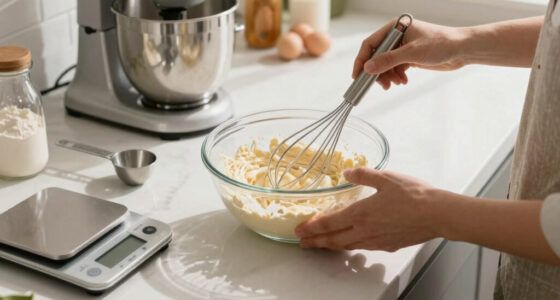
Tip: Mix just until ingredients come together smoothly. Use a paddle attachment and stop when you see a glossy, uniform texture.
How to Fix Split Frosting Without Starting Over
If your frosting splits, don’t panic. Here are three quick fixes:
- Rewhip with a little fresh liquid—add 1 teaspoon of milk or cream while mixing gently.
- Use a warm water bath—place the bowl over a warm (not hot) water to gently soften the fats, then re-whip.
- Start fresh—sometimes, the split is irreparable, and it’s better to begin again with a new batch.
For example, I once had a batch of Swiss meringue buttercream that turned grainy mid-whip. A splash of warm milk and a few seconds of gentle whisking brought it back to life, silky and smooth.
Simple Tips to Prevent Frosting Splitting Every Time
- Measure ingredients accurately—use a scale for butter and sugar.
- Use ingredients at room temperature—cold fats don’t emulsify well.
- Add liquids gradually—avoid sudden temperature changes.
- Mix at medium speed—don’t overbeat or underbeat.
- Store properly—airtight containers in a cool, stable environment.
Imagine preparing frosting like a dance—each step, ingredient, and temperature change must be in harmony for perfect results.
Frequently Asked Questions
Why does my frosting split after I’ve decorated my cake?
Changes in temperature or humidity after decorating can cause the frosting to soften, slide, or crack. Keeping the cake in a stable environment helps maintain the frosting’s integrity.
How can I fix split frosting once it’s already on my cake?
Sometimes, re-whipping with a small amount of fresh liquid or gently warming the frosting slightly can bring it back together. If it’s too far gone, starting fresh may be the best option.
What ingredients should I focus on to prevent splitting?
Use high-quality butter, powdered sugar, and stabilizers like meringue powder or gelatin. Proper ingredient ratios and fresh ingredients help keep the frosting stable.
Can I prepare frosting ahead without risking split issues?
Yes, but store it properly in an airtight container at a consistent temperature. Let it come to room temperature before spreading, and re-whip if necessary before use.
Is buttercream more stable than whipped cream?
Yes, especially if stabilized. Buttercream generally resists splitting better, while whipped cream is more delicate and prone to separation if not stabilized or kept cold.
Conclusion
Frosting splitting often comes down to simple issues like ingredient balance, temperature, and technique. When you understand these factors, fixing or preventing splits becomes second nature. The next time your frosting acts up, remember—small adjustments make the biggest difference.
With these tips in mind, your frosting will stay smooth, creamy, and perfect for every cake or cupcake. Now, go get decorating—your beautiful, stable frosting awaits!