TL;DR
Switching between butter and oil in baking alters the outcome in flavor, texture, and appearance. Butter adds richness and flakiness, while oil keeps baked goods moist and dense. Your choice should match your recipe’s goal and your health priorities.
Ever notice how a cookie can be crispy and flaky one day, then dense and moist the next? The secret often lies in the type of fat you use. Butter and oil each bring a unique personality to your baked goods—affecting flavor, texture, and even how long they stay fresh.
Understanding these differences lets you tweak recipes confidently, whether you’re after a tender cake or a flaky pastry. In this guide, you’ll learn how your fat choice shapes your bake, with real-world tips to elevate your kitchen game.
Butter adds flavor and flakiness but is higher in saturated fats; ideal for pastries and cookies.
Oil keeps baked goods moist and dense, perfect for cakes and quick breads.
Swapping fats changes texture and shelf life—use butter for flaky, oil for soft and moist.
Healthier oil options like olive or avocado offer benefits over saturated fats, especially in everyday baking.
Adjust baking times and temperatures when changing fats to get the best results.
What Does Butter Do to Your Bake? Expect Rich Flavor and Flaky Texture
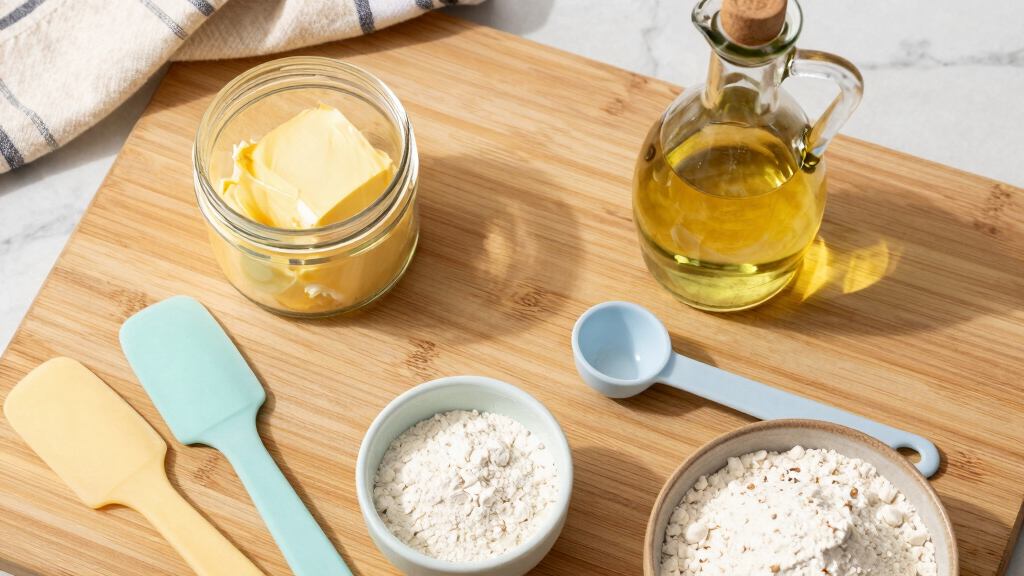
Butter is a staple that adds a rich, creamy flavor and creates a tender crumb. It contains about 80% fat, with water and milk solids that produce steam during baking. That steam helps create flakiness—perfect in pastries like croissants or pie crusts.
Imagine biting into a buttery scone—its crumb is light, yet rich. When you beat butter into cookie dough, it melts, coating flour proteins, which creates a tender, melt-in-your-mouth texture.
But be aware: butter’s water content can cause uneven spreading or browning if not managed properly. Plus, it’s higher in saturated fats, which some prefer to limit for health reasons.
best butter for baking
As an affiliate, we earn on qualifying purchases.
As an affiliate, we earn on qualifying purchases.
What Does Oil Do? Keep Baked Goods Moist and Soft
Oil is 100% fat, with no water or solids, giving baked goods a different vibe. It produces a moist, dense texture—ideal for muffins, quick breads, and cakes.
Picture a moist banana bread or a dense chocolate cake—oil often helps achieve that lush, tender crumb. Because oils don’t contain water, they don’t create steam, so baked goods tend to stay softer longer.
And because some oils (like olive or avocado) are healthier options, they add nutritional benefits without sacrificing moisture.
vegetable oil for baking
As an affiliate, we earn on qualifying purchases.
As an affiliate, we earn on qualifying purchases.
Butter vs Oil: How They Compare Side-by-Side
| Feature | Butter | Oil |
|---|---|---|
| Flavor | Rich, creamy, slightly sweet | Neutral or distinctive (olive, coconut) |
| Texture | Tender, flaky, airy | Moist, dense, soft |
| Water Content | About 16% | 0% |
| Melting Point | Lower (about 90°F) | Higher (varies by oil) |
| Health Profile | Higher saturated fats, cholesterol | Depends on oil type; healthier options available |
| Best For | Pastries, cookies, flavor-rich baked goods | Moist cakes, muffins, quick breads |
olive oil for baking
As an affiliate, we earn on qualifying purchases.
As an affiliate, we earn on qualifying purchases.
When to Pick Butter or Oil: Match the Fat to Your Baking Goal
Choosing butter or oil depends on what you want from your baked good. For flaky pastries, butter’s water content and ability to create layers are unmatched. Think croissants or Danish pastries—flaky, golden, buttery perfection.
On the other hand, oil shines in recipes where moistness and density matter—like muffins, quick breads, or dense cakes. Using oil in these recipes keeps them soft and extends freshness.
A quick tip? Swap butter for oil in a cake, and you’ll get a moister crumb but might lose some flakiness. Conversely, replacing oil with butter in a pastry can improve flakiness but might make it a tad denser.

Dufour Pastry Kitchen, All Butter Puff Pastry, 14 Oz (Frozen)
Puff Pastry makes a perfect wrapping for a variety of savory and sweet dishes.
As an affiliate, we earn on qualifying purchases.
As an affiliate, we earn on qualifying purchases.
Healthier Baking: Which Fat Is Better for You?
Health-wise, the debate isn’t simple. Butter offers a rich flavor but comes with higher saturated fats and cholesterol. Recent studies suggest moderate butter is okay, especially if balanced with healthier fats elsewhere.
Oils like olive, avocado, or canola provide monounsaturated fats, which are better for heart health. Still, some processed oils—like palm oil—raise environmental and health concerns.
In baking, choosing a high-quality extra virgin olive oil or avocado oil adds nutritional value and flavor, especially in savory baked goods or bread.
How Your Choice Affects Baking Time and Appearance
Butter’s lower melting point influences how baked goods brown and rise. It can create a golden crust and tender crumb, but overmixing can cause spreads or flattening.
Oil’s stability at high temperatures means your cake or muffin maintains moisture longer, but it might result in a denser, less flaky crust.
For example, a butter-based muffin might develop a crisp top with a tender inside, while an oil-based muffin stays uniformly moist but less flaky. Adjust baking times accordingly—oil-heavy recipes might need a slightly longer bake to dry out excess moisture.
Practical Tips for Using Butter and Oil in Your Baking
- Use cold butter for flaky pastries—cut into flour until crumbly.
- For moist cakes, substitute butter with a neutral oil like grapeseed or sunflower.
- Adjust baking temperature slightly when switching fats—higher for butter, slightly lower for oil.
- Store baked goods properly—moisture from oil can extend shelf life, but butter-based treats can dry out faster.
- Experiment with flavored oils (like basil or garlic) for savory baked goods.
Frequently Asked Questions
Can I substitute butter with oil in all baking recipes?
Not always. Substituting butter with oil can change the texture—making baked goods moister but less flaky. For pastries that rely on layers, butter is best. For cakes and muffins, oil usually works well.
What’s the healthiest oil for baking?
Extra virgin olive oil and avocado oil are among the healthiest options due to their high monounsaturated fat content. They add flavor and nutritional benefits, especially in bread and savory baked goods.
Does using oil make baked goods last longer?
Yes. Oils help retain moisture, which can extend freshness and shelf life—particularly in cakes and muffins. Butter-based treats might dry out faster if not stored properly.
How does fat type affect baking temperature?
Butter melts at a lower temperature, influencing browning and leavening. Oils are more stable at high heat, allowing for more even baking but require slight adjustments in timing for best results.
Conclusion
Choosing between butter and oil isn’t about right or wrong—it’s about what your baked good needs. Want flaky, golden layers? Butter is your friend. Craving a moist, long-lasting cake? Oil has your back.
Next time you mix ingredients, think about your goal. Your perfect bake depends on it. So, pick your fat, and let your oven do the magic.