Searching for the best manual lever espresso machines in 2026? The top picks deliver classic brewing with precise control, but they vary widely in price, build, and complexity. The La Pavoni EPC-8 stands out for its iconic design and reliable performance, making it ideal for espresso enthusiasts. The Flair UPDATED 49 PRO offers a more affordable, portable option for home baristas eager to master manual brewing without plastics or electronics. The main tradeoffs include balancing ease of use against manual control and durability. Continue reading for a detailed breakdown of each machine’s strengths and what suits different types of users.

Get baking supplies delivered free with Prime
- Fast, free delivery on millions of items
- Prime Video, Amazon Music and more included
- Member-only deals all year
Complete the kit

Key Takeaways
- The La Pavoni models excel in build quality and classic manual operation, but often come with higher prices and a learning curve.
- The Flair UPDATED 49 PRO provides a budget-friendly, portable alternative with no electronics, ideal for those new to manual espresso.
- Breville’s machines, while not purely manual levers, offer a good compromise between automation and manual control, appealing to a broader audience.
- Durability and ease of maintenance vary widely, with copper and brass boilers generally lasting longer than plastic components.
- Choosing a machine depends heavily on user experience level, whether prioritizing authentic manual control or seeking convenience.


More Details on Our Top Picks
La Pavoni EPC-8 Europiccola Lever Style Espresso Machine – Chrome & Silver – Manual Espresso Maker
This model stands out for its iconic Italian design and high-quality build, making it ideal for home baristas who value craftsmanship and control. Unlike the La Pavoni PB-16, which offers larger capacity and a more traditional aesthetic, the EPC-8 emphasizes a compact, elegant form with manual lever operation that demands skill but rewards with personalized espresso. Its chrome finish and durable materials provide long-lasting appeal, though its weight and manual nature make it less suited for those seeking quick, effortless drinks. The lever mechanism allows fine-tuning of extraction, but mastering it requires practice. This pick is perfect for espresso enthusiasts who enjoy the process as much as the result.
Pros:- Elegant Italian design with durable chrome finish
- Manual lever for personalized extraction control
- Includes milk frother and accessories for versatile drinks
- Built with high-quality materials for longevity
Cons:- Heavy and bulky, less portable
- Requires manual skill for perfect extraction
- Limited to 1-2 cups at a time
Best for: Home baristas who appreciate manual control and classic design, willing to invest time to perfect their technique
Not ideal for: Casual users seeking quick, consistent espresso without learning a manual lever technique
- Water Capacity:0.8 L
- Power:1000 Watts
- Voltage:110 Volts
- Dimensions:12”H x 7”W x 11”D
- Water Tank Capacity:20 ounces
- Material:Chrome-plated steel and brass
- Boiler Type:Nickel-plated, solid brass
- Warranty:1 year
Our verdict“This machine suits dedicated espresso lovers who value craftsmanship and control over convenience.”
La Pavoni PC-16 Professional Espresso Machine – 16-Cup Capacity, Chrome Finish, Solid Brass Boiler, Dual Frothing Systems, Mounted Pressure Gauge
This machine makes sense for serious home users or small cafes looking for high capacity and professional features. Its 16-cup capacity and dual frothing systems far surpass the smaller EPC-8, making it ideal for entertaining or multiple daily servings. The solid brass boiler and mounted pressure gauge ensure precise control, but the complexity and size mean it’s not suited for kitchens with limited space or those new to manual espresso. The detailed instructions and video help mitigate the learning curve, yet beginners should be prepared for a more involved setup. Compared to the La Pavoni PSW-16, the PC-16 offers higher capacity but at the expense of portability and ease of use.
Pros:- High-capacity 16-cup brewing capability
- Solid brass boiler for durability and thermal stability
- Dual frothing systems for versatility
- Mounted pressure gauge for precise brewing
Cons:- Heavy and bulky, less suited to small spaces
- Potentially complex for new users
- Requires manual operation and skill
Best for: Home baristas who want a semi-professional machine capable of multiple shots and advanced control
Not ideal for: Beginners or those with small kitchens seeking a simple, space-efficient espresso maker
- Capacity:16 cups
- Finish:Chrome
- Boiler Material:Solid Brass
- Boiler Capacity:38 oz
- Features:Dual Frothing Systems, Mounted Pressure Gauge
Our verdict“Best suited for enthusiasts who need a high-capacity, semi-professional machine and are comfortable with manual operation.”
La Pavoni PSW-16 Stradivari Lever Espresso Machine – 16-Cup Capacity, Chrome Finish with Wood Handles
This machine excels in combining aesthetic elegance with manual control, making it ideal for those who appreciate artistry in their espresso setup. Its design, inspired by Stradivarius violins, pairs beautifully with the large boiler and dual frothing systems, allowing multiple drinks to be brewed simultaneously. Compared to the PB-16, the PSW-16 emphasizes visual appeal with wood accents and a refined look, but it shares the same manual piston lever that demands skill. Its weight and size can be a barrier for smaller kitchens or casual users. This model is best for those who see their espresso machine as a statement piece and are willing to invest time to master the manual technique.
Pros:- Elegant design inspired by Stradivarius violins
- Manual piston lever for full extraction control
- Large boiler capacity for multiple servings
- Dual frothing systems for milk steaming
Cons:- Requires manual skill and effort to operate
- Heavy and potentially cumbersome to move
- Limited automation for convenience
Best for: Home enthusiasts who value design and are ready to learn manual brewing techniques
Not ideal for: Users seeking quick, automated espresso or minimal maintenance
- Capacity:16 cups
- Boiler Volume:38 ounces
- Finish:Chrome
- Material:Solid brass, steel, wood handles
- Made in:Italy
- Frothing Systems:Dual
Our verdict“Ideal for style-conscious users who enjoy the process of manual espresso brewing and artistic design.”
Flair UPDATED 49 PRO (Black) – Manual 49mm Lever Espresso Maker with Pressure Gauge and No Plastics
The Flair 49 PRO is a standout for those who want complete manual control over every shot, emphasizing purity and precision. Its 49mm portafilter and pressure gauge enable detailed adjustments, making it a favorite among experienced enthusiasts and dedicated hobbyists. Unlike larger, more automated machines, the Flair demands hands-on effort, but in return, it offers unmatched control and a cleaner brew path—no plastics in the brew chamber. Its compact size makes it suitable for small kitchens or travel. However, the manual effort and learning curve can be daunting for beginners, and it’s less suitable for someone seeking convenience or quick results.
Pros:- Full manual control for precise extraction
- No plastics in the brew path for pure flavor
- Compact and portable design
- Includes pressure gauge for monitoring brew pressure
Cons:- Requires manual effort and skill to operate
- Steep learning curve for beginners
- Limited automation features
Best for: Aficionados who want to hone their barista skills with full manual control and purity in their espresso
Not ideal for: Casual users or those preferring automated, hands-off brewing experiences
- Portafilter Size:49mm
- Material:Stainless steel
- Pressure Gauge:Yes, 9-bar
- No plastics in brew path:Yes
- Footprint:8 x 16 inches
Our verdict“Perfect for experienced hobbyists who prioritize control, purity, and craftsmanship in their espresso process.”
La Pavoni PB-16 Professional Copper/Brass Lever Espresso Machine
This machine embodies professional craftsmanship with its durable copper and brass construction, making it ideal for those who want a truly authentic manual experience. Its ability to produce 16 two-ounce cups simultaneously makes it suitable for small gatherings or serious espresso pursuits. The inclusion of a pressure gauge and separate cappuccino spout underscores its focus on precise control and versatility. Compared to other models like the EPC-8, the PB-16’s larger boiler and robust build cater to users who prioritize volume and durability, but its weight and manual operation mean it’s not suited for casual or space-limited kitchens. This machine is best for those willing to invest effort for cafe-quality results at home.
Pros:- Durable copper and brass construction with a professional look
- Capable of brewing multiple shots simultaneously
- Includes pressure gauge for precise control
- Elegant wood accents add aesthetic appeal
Cons:- Heavy and bulky, challenging to move or store
- Requires manual operation and skill for best results
- No automatic features for ease of use
Best for: Home baristas with experience seeking a durable, high-capacity lever machine with professional features
Not ideal for: Beginners or those with limited space who prefer automation or minimal manual effort
Our verdict“Best suited for serious espresso enthusiasts seeking a durable, high-capacity lever machine with professional-level control.”
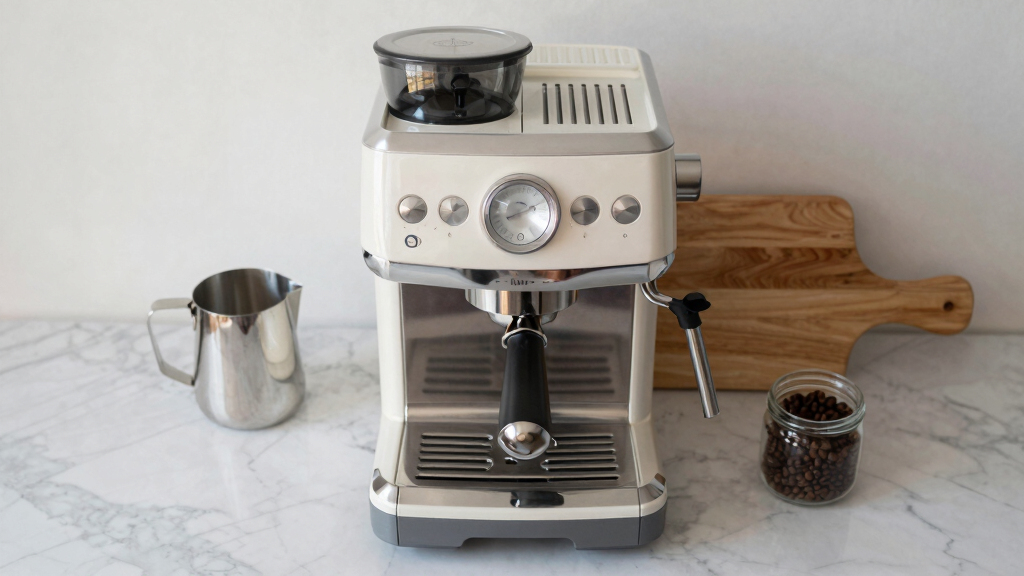
Breville Barista Express Impress Espresso Machine BES876BSS, Brushed Stainless Steel
The Breville Barista Express Impress stands out for its combination of automation and customization, making it ideal for serious home baristas who want café-quality results without professional training. Its automatic dosing and assisted tamping help achieve consistent shots, a notable improvement over manual-only machines like the La Pavoni EPC-8, which require more skill and effort. The built-in conical burr grinder with 25 grind settings offers fresh coffee grounds tailored to your taste. Precise temperature control via the Thermocoil system ensures optimal extraction, while the powerful steam wand enables microfoam textures suitable for latte art. However, its complex setup can be daunting for beginners, and its larger footprint demands ample counter space. The higher price reflects its feature set, making it less ideal for casual users. Overall, this pick makes the most sense for home enthusiasts seeking a semi-automatic machine with smart features.,”
Pros:- Automatic dosing and assisted tamping for consistent shots
- Built-in conical burr grinder with multiple grind settings
- Precise temperature control with Thermocoil system
- Powerful steam wand for microfoam milk
Cons:- Setup can be complex for beginners
- Relatively large size requires ample counter space
- Higher price compared to basic espresso machines
Best for: Home baristas who value consistency and advanced features but are comfortable with a more involved setup.
Not ideal for: First-time users or those with limited space who prefer a simple, plug-and-play espresso maker.
- Capacity:250g bean hopper, 2L water tank
- Grind Settings:25
- Portafilter Size:54mm
- Included Accessories:Stainless steel milk jug, filter baskets, water filter holder, trimming tool, cleaning tablets
Our verdict“This machine is best suited for experienced home enthusiasts who want advanced features and consistent results.”
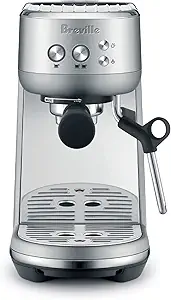
Breville Bambino Espresso Machine BES450BSS, Brushed Stainless Steel
The Breville Bambino excels as a compact, fast-heating option that still delivers professional-quality espresso, making it perfect for small kitchens or quick routines. Its rapid 3-second heat-up and digital PID temperature control ensure that you get hot, well-extracted espresso without waiting. The automatic steam wand simplifies milk texturing, allowing home baristas to produce microfoam suitable for latte art, although it may not match the finesse of the more manual steam wand on the La Pavoni PC-16. While the Bambino’s size is ideal for tight spaces, its limited capacity and features make it less suitable for frequent use by multiple users or those seeking advanced customization. The price reflects its home-use focus, and some skill is needed to optimize results. This pick makes the most sense for small households or busy mornings where speed and simplicity outweigh extensive control.,”
Pros:- Fast heat-up time of 3 seconds
- Automatic steam wand for easy milk frothing
- Precise temperature control with digital PID
- Includes free coffee bags with registration
Cons:- Limited to home use, not suitable for high-volume environments
- Requires some barista skill for best results
- Price not clearly specified, potentially higher than basic models
Best for: Individuals living in small apartments or who want quick, reliable espresso with minimal fuss.
Not ideal for: Experienced home baristas seeking deep customization or commercial-grade performance.
- Power:1560 Watts
- Voltage:110-120 Volts
- Portafilter Size:54mm
- Water Temperature Control:Digital PID
- Warranty:1 Year Limited
Our verdict“This machine is ideal for small spaces and users who want quick, consistent espresso without complex controls.”
How We Picked
To determine the best manual lever espresso machines, I evaluated each model based on performance, build quality, user experience, and value for money. I looked for machines that offer true manual operation, durable construction, and consistent results. Ease of maintenance and the availability of spare parts also influenced the rankings, as these factors impact long-term satisfaction. I compared features such as boiler material, pressure control, and ergonomic design to identify models suitable for both beginners and seasoned baristas. The final list balances these criteria to reflect different user needs, from those seeking authentic manual brewing to those wanting a reliable, stylish machine.Factors to Consider When Choosing Best Manual Lever Espresso Machines
Choosing the best manual lever espresso machine involves understanding several key factors. While the appeal of manual levers lies in control and tradition, not all models are suited to every user. Consider your experience level, budget, and how much effort you’re willing to invest in each shot. The right machine should match your goals—whether you want a simple, portable option or a professional-grade, durable setup. Here are some important considerations to keep in mind:Build Quality and Durability
Look for machines made from high-quality materials like brass and copper, which resist corrosion and last longer. Cheaper models with plastic components may save money upfront but often require more maintenance or replacements over time. Consider the boiler type, as solid brass or copper boilers tend to be more durable and provide stable temperature control, essential for consistent espresso extraction.
Ease of Use and Learning Curve
Manual lever machines require technique and practice to master. Some models, like the La Pavoni EPC-8, have a straightforward lever operation but demand familiarity with pressure control. Others, such as Flair’s models, are designed to be more intuitive for beginners, with clear pressure gauges and simpler workflows. Be honest about your comfort level with manual brewing to choose a machine that won’t discourage you early on.
Size and Portability
If space is limited or you want to take your machine on the go, compact models like the Flair UPDATED 49 PRO fit easily into small kitchens or bags. Larger, more traditional lever machines tend to be bulkier and are better suited for dedicated coffee setups. Consider where you’ll use the machine most often and choose accordingly.
Price and Value
Manual lever espresso machines range from affordable models to premium, investment-grade options. Higher-priced models generally offer better build quality, durability, and finer control, but may be overkill for casual users. Conversely, budget models can be a great way to learn the basics but might require more maintenance or yield inconsistent results. Match your budget with your desired level of control and long-term commitment.
Pressure Control and Consistency
Accurate pressure control is essential for extracting balanced espresso shots. Some models include built-in pressure gauges, helping users fine-tune their technique. Others rely on manual pressure, which can be more challenging but offers authentic control. Understanding your willingness to experiment versus desire for consistency can guide your choice between these approaches.
Frequently Asked Questions
Are manual lever espresso machines suitable for beginners?
Yes, but with some caveats. Beginners can find manual lever machines rewarding as they promote a deeper understanding of espresso brewing. However, they require patience and practice to master the technique, especially pressure control. Starting with a model that offers a pressure gauge or simpler lever operation can ease the learning curve. For those unwilling to invest significant time, semi-automatic or automatic machines might be more practical, but manual levers offer unmatched control once mastered.
How difficult is it to maintain a lever espresso machine?
Maintenance largely depends on the build quality and boiler material. Machines with brass or copper boilers generally need less frequent cleaning and last longer, provided they are properly descaled and kept dry. Regularly cleaning the group head, replacing gaskets, and descaling are essential to keep the machine performing well. Higher-end models often come with easier access points for cleaning, making routine upkeep less daunting. Overall, proper maintenance extends the lifespan and preserves espresso quality.
Can I use a manual lever machine for commercial purposes?
While manual lever machines are primarily designed for home use or small-scale barista practice, some durable models like La Pavoni’s professional-grade options can handle moderate commercial use. However, for high-volume environments, automatic or semi-automatic commercial machines are typically more efficient. Manual levers demand more time and effort per shot, which may not scale well in busy settings but can be excellent for boutique cafes or serious hobbyists seeking craftsmanship.
What’s the main advantage of a manual lever espresso machine over other types?
The key benefit lies in the level of control over extraction variables like pressure and timing. Manual lever machines allow the barista to finely tune each shot, often resulting in superior flavor and crema when used skillfully. They also provide a more traditional, tactile experience that many espresso enthusiasts cherish. However, this advantage comes with a steeper learning curve and a need for technique, making them less suitable for those seeking convenience or speed.
Are there any downsides to choosing a manual lever espresso machine?
Manual lever machines can be more challenging to operate consistently, especially for beginners. They often require significant manual effort and precise technique to produce good espresso, which may lead to inconsistent results initially. Additionally, some models have limited automation, meaning more time and skill are needed to brew each cup. They also tend to be more expensive and require regular maintenance, which can be a downside for casual or infrequent espresso drinkers.
Conclusion
For those seeking the best overall experience, the La Pavoni EPC-8 Europiccola offers timeless design, reliable performance, and a satisfying manual process. Budget-conscious users or travelers will appreciate the Flair UPDATED 49 PRO for its portability and simplicity. Serious hobbyists and aspiring baristas aiming for durability and classic craftsmanship should consider the La Pavoni PB-16 Professional Copper/Brass. Beginners or casual users might prefer semi-automatic options, but for full manual control and authentic brewing, these top picks cover all needs—whether you prioritize price, ease, or traditional operation.