
TL;DR
Shortening is a fat that’s solid at room temperature, historically linked to trans fats. Modern versions are trans-free but still serve specific baking functions. You can often replace it with healthier fats based on your goals.
When you think of shortening, you probably picture a waxy, white block sitting in your baking cabinet. But what if I told you that the shortening you grew up using has undergone a complete transformation—both in ingredients and perception? Many home bakers still reach for it out of habit, unaware that it’s no longer the villain it once was.
This guide will strip away the hype and explain what shortening really is, how it’s made today, and whether you still need it in your recipes. Spoiler: For most home bakers, it’s optional, but for certain textures and finishes, it might still be hard to beat.
Modern shortening is trans-fat-free but still serves specific baking needs—like flaky crusts and stable frostings.
You can replace shortening with healthier fats like butter, coconut oil, or animal fats, but expect changes in texture and flavor.
Shortening’s history is tied to trans fats, which are now banned; current versions are reformulated but may carry lingering health debates.
For everyday baking, most home cooks don’t need shortening—simple swaps work just as well, often with added flavor.
Understanding what you want from your baked good helps decide whether to use or skip shortening.
The Truth About Shortening — and Whether You Still Need It
The waxy white block in your cabinet has been completely reinvented. Today’s shortening is trans-fat-free and chemically different from your grandmother’s Crisco — yet it still does one job better than almost any other fat. Here is what changed, what didn’t, and when it still earns its place.
What shortening actually is
Any fat that is solid at room temperature and used to tenderize doughs. The name describes the mechanism: it coats flour proteins and “shortens” gluten strands, giving you crumbly and flaky textures instead of chewy ones.
It shortens gluten
Fat coats flour proteins, blocking them from linking into long gluten networks. Result: tender pie crusts and crumbly cookies rather than bread-like chew.
100% fat, no water
Butter is roughly 80% fat and 16–18% water. Shortening is all fat — no steam, less gluten development, more predictable structure in the oven.
New chemistry
Partial hydrogenation is out. Today’s blocks use full hydrogenation plus interesterification, or naturally semi-solid fats like palm oil.
Partially hydrogenated oils (PHOs)
Liquid cottonseed or soybean oil forced into a solid block — a process that created artificial trans fats, later tied to LDL cholesterol and cardiovascular disease.
Interesterified fats & palm oil
Trans-fat-free by design. Functional performance is preserved, though long-term research on interesterified fats is less settled — and palm oil carries its own saturated-fat and sustainability debates.
How shortening got its bad rap — and lost it
The villain era was real, and it ended. Artificial trans fats went from baking staple to effectively banned in just over a decade.
Crisco launches
Procter & Gamble markets hydrogenated cottonseed oil as the “pure,” modern alternative to lard.
The PHO era
Partial hydrogenation becomes the industry standard — quietly flooding the food supply with trans fats.
Health alarm
Studies link trans fats to raised LDL, lowered HDL, and preventable cardiovascular disease.
Reformulation
Crisco and competitors strip trans fats to under 0.5 g per serving, industry-wide.
The FDA ban
PHOs ruled no longer “Generally Recognized as Safe”; artificial trans fats exit the US food supply.
New chemistry
Interesterified fats and palm oil do the same job — with open questions still being studied.
“Eliminating artificial trans fats was a major public-health victory — but the substitutes that replaced them are still writing their own health record.”
Context · WHO REPLACE initiative · FDA PHO rulingWhy bakers still reach for it
No water, a high melting point, and neutral flavor give shortening real advantages butter can’t always match. Its one trade-off: zero flavor of its own — which is why many recipes blend the two.
Distinct flakes
High melting point + no water = layers that separate, not a mealy crumb. Easier to handle than butter.
Bright white & stable
No butter-yellow tint, holds its shape at room temperature — the decorator’s standard.
Thick & soft
No water means no steam-driven spread: cookies stay taller, thicker, softer.
Superior aeration
Creams beautifully in high-ratio cakes; neutral flavor lets vanilla, citrus, or chocolate dominate.
Heat-stable
A high smoke point and oxidative stability made it a historic frying staple.
No flavor
Butter wins on taste, every time. The classic compromise: blend both for flavor plus flake.
Can you replace it? Absolutely — here’s how
Every swap changes melting point, flavor, and moisture. Pick based on what you want the finished bake to do.
| Substitute | Flavor | Texture Impact | Best For | Verdict |
|---|---|---|---|---|
| Butter | Rich, unmatched | More cookie spread; less flaky crusts | Cookies, cakes, flavor-first bakes | ✓ Easy 1:1 |
| Coconut Oil | Neutral to faint coconut | Melts fast — chill the dough first | Pie crusts, vegan bakes | ✓ 1:1, keep cold |
| Lard / Tallow | Savory depth | Exceptionally flaky pastry | Heritage pie dough, tortillas | ✓ Heritage pick |
| Liquid Oils | Neutral (avocado, grapeseed) | Tender but no flake; needs ratio tweaks | Quick breads, some cakes | ~ Adjust recipe |
| Palm Shortening | Neutral | Closest match to classic shortening | Frosting, flaky crusts | ✓ Like-for-like |
| Margarine | Mild buttery | Water content softens the crumb | Last-resort swaps only | ~ Check fat % |
How shortening builds a flake
The whole magic in four steps — from raw flour to shattering layers.
Flour Proteins
Glutenin and gliadin wait to link into long gluten strands.
Fat Coats Flour
100% fat waterproofs the proteins before water can activate them.
Strands Shortened
Gluten networks stay short and weak — tenderness by design.
Flaky Crumb
Layers separate, crusts shatter, cookies crumble — exactly as planned.
Optional for most — unbeatable for some
The clean-label movement and the seed-oil debate pushed many bakers back toward butter, lard, and tallow. For everyday baking, shortening is a choice, not a requirement — but certain finishes still have no true substitute.
Texture is the whole point
- Ultra-flaky pie crust with uniform, golden, sog-free layers
- Bright white frosting that holds shape in a warm kitchen
- Thick, soft cookies with zero unwanted spread
- High-ratio cakes needing maximum aeration and fine crumb
- Consistency and appearance matter more than flavor
Flavor & labels come first
- Flavor matters most — butter wins on taste every time
- Everyday baking — simple swaps work just as well
- You follow a clean-label, recognizable-ingredient kitchen
- You already stock butter, lard, or coconut oil
- You’re avoiding palm oil or highly processed fats
What is shortening, really? The simple truth about this baking staple
Shortening is a fat that’s solid at room temperature, used to tenderize baked goods. It coats flour proteins, preventing gluten from forming too much, which creates flaky pie crusts and crumbly cookies. Unlike butter, which is about 80% fat and contains water, shortening is typically 100% fat.
Historically, it was made through partial hydrogenation of vegetable oils—think cottonseed or soybean oil—turning liquid oil into a waxy, white block. This process was revolutionary but introduced a hidden danger: artificial trans fats, linked to heart disease.
Today’s shortening is mostly fully hydrogenated or interesterified fats, which eliminate trans fats but still serve the same functional role in baking. So, what you buy now isn’t the same as the Crisco of your grandmother’s era.
Understanding its composition and production methods is crucial because these choices directly impact health and baking performance. For instance, fully hydrogenated fats and interesterified fats are designed to mimic the functional qualities of traditional shortening while reducing health risks, but they may have different melting points and handling characteristics that influence how your baked goods turn out. Recognizing these differences helps bakers make informed choices based on the texture, flavor, and health considerations they prioritize.
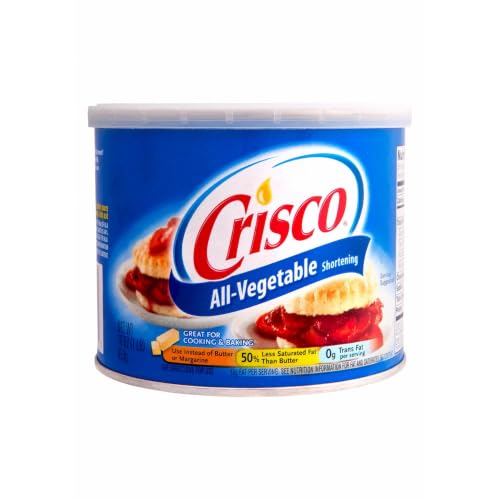
Crisco All-Vegetable Shortening, 16 Ounce
- Classic blue can for versatile use: Ideal for baking and frying
- 50% less saturated fat than butter: Healthier fat option
- Zero grams trans fat per serving: Trans fat free
As an affiliate, we earn on qualifying purchases.
As an affiliate, we earn on qualifying purchases.
The trans-fat chapter: Why shortening got a bad rap—and what’s changed
Back in the day, partial hydrogenation created trans fats—artificial fats that boost LDL cholesterol and increase heart disease risk. This made shortening a villain in the nutrition world. According to health studies, trans fats were a leading cause of preventable cardiovascular issues.
In 2007, brands like Crisco reformulated to remove trans fats, and by 2018, the FDA declared partially hydrogenated oils no longer safe for consumption. Now, most modern shortenings are trans-fat-free but often contain interesterified fats or palm oil.
While these alternatives eliminate trans fats, some researchers are still studying their health effects. Palm oil, for example, is high in saturated fat and has environmental concerns—deforestation and habitat loss—adding layers to the debate.
This shift away from trans fats reflects a broader understanding of how fats influence health. Eliminating trans fats was a major public health victory, but it also prompted food scientists to develop new formulations that maintain functionality without the harmful effects. However, these substitutes—like interesterified fats—may carry their own uncertainties, such as potential impacts on insulin sensitivity or cholesterol levels. Being aware of these nuances allows consumers and bakers to weigh the tradeoffs between functional performance and health implications more thoughtfully.
Crisco All-Vegetable Shortening, 16 Ounce
- Classic blue can for versatile use: Ideal for baking and frying
- 50% less saturated fat than butter: Healthier fat option
- Zero grams trans fat per serving: Trans fat free
As an affiliate, we earn on qualifying purchases.
As an affiliate, we earn on qualifying purchases.
Why bakers still turn to shortening: When it outperforms butter
Despite the push for natural fats, shortening remains a go-to for certain baking tasks. Its high melting point and lack of water make it ideal for flaky pie crusts, where layers need to separate easily. It also produces bright white frostings that stay stable at room temperature.
Cookies benefit too—shortening keeps them thicker and softer because it doesn’t release water steam as butter does. For cakes, it provides excellent aeration, helping batter rise evenly with a fine crumb.
Imagine making a perfect, flaky apple pie. Using shortening ensures those crisp, tender layers that butter alone might struggle to deliver—especially if you want a uniform, golden crust that holds up without sogginess.
Choosing shortening in these instances isn’t just about convenience; it’s about achieving specific textural qualities that are difficult to replicate with other fats. Its ability to create a tender, flaky, and stable product makes it invaluable for certain traditional baked goods, especially when consistency and appearance matter. Understanding these tradeoffs helps bakers decide when the functional advantages outweigh the health considerations, allowing for smarter ingredient choices tailored to the desired outcome.
Crisco All-Vegetable Shortening, 16 Ounce
- Classic blue can for versatile use: Ideal for baking and frying
- 50% less saturated fat than butter: Healthier fat option
- Zero grams trans fat per serving: Trans fat free
As an affiliate, we earn on qualifying purchases.
As an affiliate, we earn on qualifying purchases.
The latest trends: Do you really need shortening today?
The clean-label movement has pushed many away from shortening, favoring butter, lard, or even animal fats. Consumers now prefer recognizable, minimally processed ingredients. Meanwhile, the rise of seed oil skepticism has led some bakers to explore animal fats like tallow or lard for traditional textures.
Reformulated products—like organic, non-hydrogenated shortenings—are widely available. Yet, for most home bakers, these are more about preference than necessity. You can make delicious baked goods with butter, coconut oil, or even homemade lard, depending on the recipe and desired outcome.
So, where does that leave you? Shortening still has a place—if you want specific textures or stability—but it’s no longer a must-have for everyday baking.
Understanding the current trends and consumer preferences reveals that the use of shortening is increasingly about achieving particular textures or shelf stability rather than a dietary requirement. While some bakers opt for animal fats or plant-based alternatives for flavor or health reasons, many find that traditional fats like butter or coconut oil can deliver comparable results with added nutritional benefits. Recognizing these trends empowers home bakers to make choices aligned with their values and health priorities, rather than defaulting to outdated staples.

Crisco All-Vegetable Shortening, 6 Pounds
- Classic blue can design: Original Crisco All-Vegetable Shortening
- Versatile kitchen use: Ideal for baking and frying
- Enhances baked goods: Creates flaky crusts and fluffy frosting
As an affiliate, we earn on qualifying purchases.
As an affiliate, we earn on qualifying purchases.
Can you replace shortening? Your best options and how to do it
Absolutely, you can swap shortening for other fats. Here’s a quick guide:
- Butter: Adds flavor and moisture but can cause more spread in cookies and less flaky crusts.
- Coconut oil: Solid at room temperature, offers a neutral flavor, but melts faster—adjust baking time accordingly.
- Lard or tallow: Great for flaky pastries with a rich, savory note.
- Vegetable oils (like avocado or grapeseed): Use with caution—liquid fats often need adjustments, like chilling dough longer.
- Commercial substitutes: Look for non-hydrogenated, palm-based shortenings if you want similar textures without trans fats.
When substituting, consider how each fat’s melting point, flavor, and moisture content will influence your final product. For example, butter’s water content can help create steam and lift in baked goods but may lead to spreading or sogginess if not balanced correctly. Similarly, solid fats like lard or coconut oil can replicate the flaky layers of shortening but might introduce different flavors or textures. Weighing these factors ensures your baked goods maintain their intended qualities, even when replacing the original fat.
Comparison table: Shortening vs. Butter vs. Lard
| Feature | Shortening | Butter | Lard |
|---|---|---|---|
| Fat content | 100% | 80% (plus water) | 100% |
| Flavor | Neutral | Rich, buttery | Rich, porky |
| Texture in baked goods | Flaky, tender | Crumbly, flavorful | Very flaky, moist |
| Health concerns | Depends on fat source; often interesterified fats | Saturated fat, cholesterol | High saturated fat |
| Best use | Pie crusts, frostings, cookies | Pastries, flavor-rich baked goods | Traditional flaky pastries |
What you should do next: Use or skip shortening?
If you’re aiming for flaky crusts, stable frostings, or soft cookies, shortening still has a role. But for most everyday baking—cakes, muffins, cookies—beyond health concerns, butter or other fats often work just as well, sometimes better.
Experiment with small batches. Swap out half the shortening for butter or coconut oil. See how the texture and flavor change. The key is understanding what outcome you want from your baked goods.
Remember: You don’t have to use shortening every time. Your baking can still be delicious, healthy, and satisfying without it.
Frequently Asked Questions
Is shortening bad for your health?
Originally, shortening contained trans fats, which are linked to heart disease. Today’s versions are trans-fat-free, but they often contain interesterified fats or palm oil. Moderate use is unlikely to harm if you’re mindful of overall fat intake.
Can I substitute butter for shortening 1:1?
Yes, in most recipes, you can swap butter for shortening by weight or volume. Expect a richer flavor but potentially more spread in cookies and less flakiness in pastries. Adjust baking times or add a little extra flour if needed.
Is shortening necessary for flaky pie crusts?
Shortening’s high melting point and lack of water help create crisp, flaky layers. While butter can also produce flaky crusts, shortening often results in more uniform layers. You can use a blend to balance flavor and texture, and understanding these tradeoffs helps you tailor your crusts to your preferences and dietary needs.
What should I look for on the label?
Check for fully hydrogenated or interesterified fats—these are trans-fat-free. Avoid partially hydrogenated oils, which contain trans fats. Organic, palm-based shortenings are options if you want a more natural product, but always consider the environmental and health implications of the ingredients.
How do I store shortening, and how long does it last?
Store in a cool, airtight container at room temperature. It stays good for about 1–2 years unopened and 6–12 months once opened. Rancid shortening smells off—paint-like or sour—and should be discarded. Proper storage preserves its quality and ensures your baked goods turn out as intended.
Conclusion
Shortening isn’t a dietary villain—it’s a tool that still offers unique benefits in baking. But it’s no longer a necessity. Armed with knowledge about its history, makeup, and alternatives, you can make smarter choices tailored to your health and taste preferences.
Next time you bake, ask yourself: Is this the right fat for the texture I want? Or can I achieve it with something simpler and more natural? Your taste buds—and your heart—will thank you.