TL;DR

Get baking supplies delivered free with Prime
- Fast, free delivery on millions of items
- Prime Video, Amazon Music and more included
- Member-only deals all year
Macarons are often thought to be extremely difficult, but with precise measurement, patience, and the right techniques, anyone can make beautiful, crispy shells with a chewy interior. Success depends on understanding common mistakes and practicing consistently.
Use a digital scale for precise measurements — ±1 gram makes a difference.
Let piped shells rest until a skin forms—this prevents cracks and hollows.
Fold your batter gently and stop at the right consistency—lava flow but not runny.
Control your oven temperature with an oven thermometer—185°C (365°F) is a good starting point.
Practice patience—every batch is a step toward mastery, not a final judgment.
The Macaron Myth: Why They’re Hard and How to Win Anyway
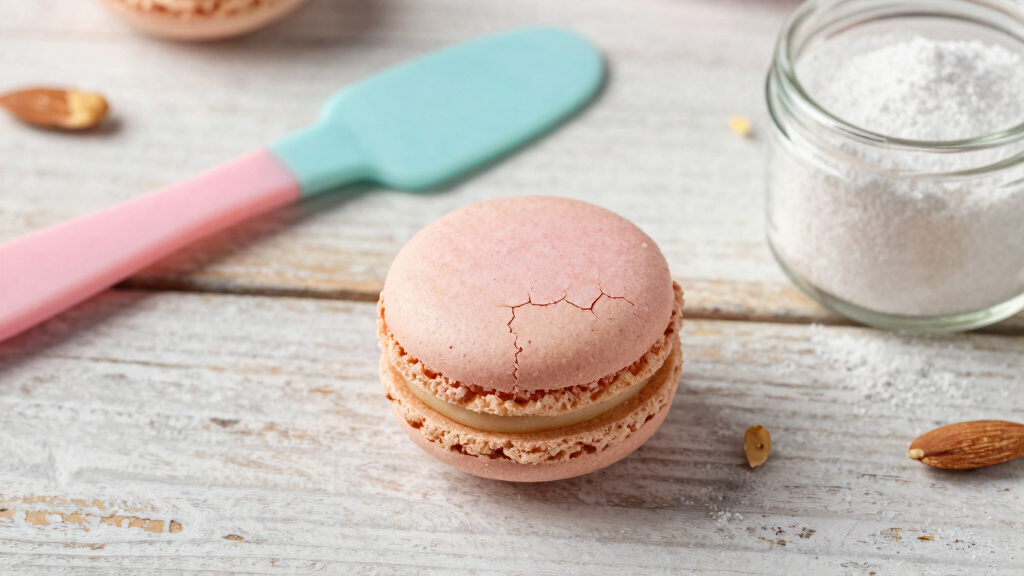
Macarons are not impossible. They are precise. The difference between cracked, hollow shells and crisp, chewy success usually comes down to stable meringue, careful folding, enough drying time, and a calibrated oven.
Most macaron failures are feedback, not final judgment.
The challenge is a chain of tiny variables.
Macarons punish randomness. Humidity, folding, piping pressure, oven heat, and meringue structure all interact. Once each variable has a job, the process becomes less mysterious and much more repeatable.
Meringue stability
Underdeveloped or unstable meringue cannot support the shell as it rises, which often leads to hollows or collapse.
Macronage timing
The batter should flow like lava and hold a thick ribbon. Too stiff cracks; too runny spreads flat.
Drying and heat
A firm skin controls moisture release, while an oven thermometer keeps temperature swings from sabotaging the bake.
A better batch follows a predictable flow.
Think of the process like tuning an instrument. Small adjustments in measurement, folding, rest, and heat produce a cleaner shell, steadier feet, and a chewy interior.
Weigh
Use a digital scale and treat one gram as meaningful.
Whip
Build stable meringue with aged egg whites and patience.
Fold
Stop when the batter ribbons slowly, not when it runs.
Rest
Wait until the tops feel dry and lightly set.
Bake
Use a thermometer and begin around 185°C / 365°F.
The top mistakes have targeted fixes.
Cracks, hollows, uneven feet, browning, and sticky tops are not random disasters. Each points back to a specific part of the method.
| Problem | Likely Cause | Fast Fix | Risk Level |
|---|---|---|---|
| Cracked shells | Heat too high, weak skin, or trapped air expanding too fast. | ✓ Rest shells and verify oven temperature. | ~ Medium |
| Hollow shells | Meringue lacks structure or batter was folded past stability. | ✓ Whip steadily and stop at thick ribbon stage. | ✗ High |
| Uneven feet | Inconsistent piping, uneven batter, or tilted tray. | ✓ Use a template and consistent pressure. | ~ Medium |
| Browning or sticking | Overbaking, hot spots, or tray surface issues. | ✓ Lower heat slightly and use a steady mat or parchment. | ~ Medium |
| Sticky shells | Moisture remains because drying time was too short. | ✓ Rest 30-60 minutes in a dry, cool place. | ✗ High |
Where to spend your attention first.
Not every step carries the same weight. For beginners, measurement, folding, drying, and oven control create the biggest improvement in repeatability.
French vs. Italian meringue.
The best method depends on your tolerance for complexity. French meringue is approachable and traditional; Italian meringue is more stable but asks for more equipment and confidence.
| Method | Best For | Pros | Cons | Beginner Fit |
|---|---|---|---|---|
| French meringue | Learning texture and folding by feel. | ✓ Gentle, traditional, fewer steps. | ~ Requires patience and slow folding. | ✓ Strong |
| Italian meringue | Bakers who want a steadier batter. | ✓ More stable and less prone to cracking. | ✗ Needs syrup temperature control. | ~ Moderate |
Every failed tray is useful data.
Macarons reward observation. Instead of asking whether you are good enough, ask what the shell is reporting about moisture, heat, folding, or structure.
When shells crack
Look at drying time and oven spikes first. A proper skin slows moisture release and gives the shell time to lift evenly.
When shells are hollow
Review meringue strength and folding. The shell needs internal support before the oven asks it to rise.
From myth to mastery.
The win is not one secret trick. It is a connected system: measure precisely, create structure, control moisture, manage heat, read results, then repeat with intention.
Fast answers for the next batch.
Most beginner questions circle back to control: consistent ingredients, patient resting, steady heat, and knowing when the batter has reached the right flow.
Are macarons really hard at home?
They are tricky at first, but accurate measurement, shell resting, and oven control make them far more manageable.
What ruins them most often?
Overmixing or undermixing changes the batter structure. Test for a slow, thick ribbon before piping.
Can I skip a stand mixer?
Yes, but manual whisking takes more time and stamina. The goal is still a stable, glossy meringue.
How long until I improve?
Some bakers improve in a few tries; others need 10-15 batches. Each attempt sharpens your eye.
Why Do Macarons Seem So Hard? The Real Challenges You Face
Making perfect macarons often feels like trying to hit a moving target. The key issues? Achieving the right meringue, controlling humidity, and baking at the correct temperature. For example, a humid kitchen can turn your batter into a sticky mess or cause shells to crack.
Many bakers struggle with shells cracking or turning hollow. This usually happens when the meringue isn’t stable or when the shells aren’t dried enough before baking. It’s not about talent; it’s about technique and environment.
Think of it like tuning a musical instrument. Slight adjustments in timing, temperature, or mixing can make all the difference. Once you understand these common challenges, you’re halfway to fixing them.
Understanding the why behind these issues is crucial. Cracks often result from rapid expansion of trapped air or uneven heat distribution, which can be mitigated by proper drying and oven calibration. Hollow shells usually mean the meringue didn’t develop enough structure, leading to insufficient support during baking. Recognizing these causes helps you focus on targeted fixes rather than random trial-and-error.
Products Worth Considering

Le Creuset Enamemed Cast Iron Oval Dutch Oven, 5 qt., White/Crucible

Le Creuset Enameled Cast Iron Round Dutch Oven, 5.5 Qt, Flame

Le Creuset Signature Enameled Cast Iron Round Dutch Oven, 5.5 qt, Deep Teal
As an affiliate, we earn on qualifying purchases.
The Top 5 Mistakes That Ruin Your Macarons (And How to Fix Them)
- Cracking shells: Cracks occur when the batter is over-dried or baked at too high a temperature, causing rapid expansion. To fix this, gently fold the batter until it flows smoothly but still holds a thick trail, and always use an oven thermometer to maintain consistent heat. Resting the shells until they form a skin also helps prevent cracking by creating a barrier that controls moisture release during baking.
- Hollow shells: Hollow shells are often due to under-mixing the meringue or over-drying the shells. Proper macronage, which involves folding until the batter flows like lava and holds a thick ribbon, creates a stable structure. Resting shells just enough to form a skin ensures the batter doesn’t collapse during baking, supporting a uniform interior.
- Uneven feet: Uneven feet happen when piping is inconsistent or the batter isn’t uniform. Using a piping template or practicing consistent pressure ensures even batter deposition, which promotes uniform foot development. Additionally, understanding the ideal batter consistency helps achieve consistent results every time.
- Browning or sticking: Overbaking or baking at too high a temperature causes browning or shells sticking to the tray. Using an oven thermometer allows precise control, and baking at a moderate, steady temperature (around 185°C/365°F) helps develop shells with the perfect color and texture without sticking or burning.
- Sticky shells: Excess moisture or insufficient drying time results in sticky shells that won’t develop their characteristic smooth surface. Resting shells in a dry, cool spot for 30-60 minutes allows excess moisture to evaporate, creating a skin that prevents sticking and cracking during baking. Proper drying is essential for achieving that delicate, smooth surface.
How to Make Macarons Less Frustrating: 3 Proven Techniques That Work
- Use precise measurements: A digital scale measuring to the gram ensures consistency. Slight variations in ingredient weight can significantly affect the batter’s behavior, leading to issues like overmixing or under-structuring. Accurate measurements help you replicate successful batches and understand how each ingredient influences the final product.
- Master the macronage: Gently fold the batter until it flows like lava but still holds a thick ribbon. This step is critical because under-folding results in dense shells that crack or don’t develop feet, while over-folding leads to batter that’s too runny and spreads too much. Achieving the right consistency ensures the shells rise evenly and develop that characteristic foot.
- Control drying time: Rest piped shells until they form a firm skin—usually 30-60 minutes depending on humidity. This step is vital because it creates a barrier that prevents cracks and hollow interiors. Rushing this process often results in shells that crack or don’t develop feet properly. Learning to gauge the right drying time based on your environment will dramatically improve your success rate.
Compare Common Approaches to Making Macarons: What’s Better?
| Method | Pros | Cons |
|---|---|---|
| French meringue | Gentle, traditional, good for beginners | Requires patience and slow folding, which can be time-consuming and may lead to overmixing if rushed |
| Italian meringue | More stable, less prone to cracking, creates a smoother batter that’s easier to handle | More complex, needs a thermometer and more steps, which can intimidate beginners |
What It Takes to Keep Trying and Succeed
Every failed batch is a step toward mastery. Think of it like practicing a new instrument: each attempt teaches you nuances about timing, technique, and environment. Over time, these lessons help you develop an intuitive sense of when the batter is just right or when the shells are ready to bake.
Persistence is key. Instead of viewing cracks or hollows as failures, see them as valuable feedback. Analyze what went wrong—was the meringue too stiff? Was the drying time insufficient? Did the oven temperature fluctuate? Each insight helps you refine your process. Remember, even professional bakers spend years perfecting their craft, so patience and continuous learning are your best allies.