TL;DR

Get baking supplies delivered free with Prime
- Fast, free delivery on millions of items
- Prime Video, Amazon Music and more included
- Member-only deals all year
Custard without the curdle is achievable with precise temperature control, quality ingredients, and gentle cooking. Using stabilizers like cornstarch or modern tools like sous-vide makes the process foolproof. Follow these tips for silky, smooth results every time.
Ever had a custard turn into a lumpy mess just when you thought it was perfect? That’s the curse of curdling—when silky, creamy custard suddenly becomes grainy and unappetizing. But here’s the good news: you can make custard that stays smooth, no matter what.
In this guide, you’ll learn simple, practical techniques that turn your custard into a flawless treat. Whether you’re baking a tart, making a dessert sauce, or crafting a custard pudding, these tricks will help you avoid the dreaded curdle and get that luscious texture you crave.
Controlling the temperature is the single most effective way to prevent curdling—keep it just below boiling point, around 170°F.
Using a water bath provides gentle, even heat that’s hard to beat for smooth custard results.
Adding stabilizers like cornstarch or plant-based thickeners can help maintain creaminess without risking curdle.
Modern tools like sous-vide make custard making foolproof by eliminating temperature fluctuations.
If your custard curdles, quick action—whisking or blending—can often fix the texture, but prevention beats cure.
Custard Without the Curdle: A Foolproof Approach
Silky custard is a temperature story. Egg proteins become grainy when they heat too fast, rise too high, or hit sudden hot spots. Keep the mixture gentle, stable, and just below boiling, and the same ingredients turn glossy, spoon-coating, and smooth.
Curdling is not bad luck. It is uneven protein coagulation.
Thickens eggs without boiling the custard.
Gentle bain-marie heat for baked custards.
Cornstarch per cup adds curdle resistance.
Sous-vide removes temperature swings.
Quick blending can reduce small lumps.
What Makes Custard Break
Custard curdles when egg proteins tighten before the liquid and fat can form a smooth gel. The prevention strategy is simple: warm gradually, stir evenly, buffer when needed, and stop before the mixture boils.
Overheating
High heat pushes proteins past the silky stage and into tight clumps. A thermometer turns the danger zone into a visible boundary.
Thermal Shock
Boiling milk poured straight into eggs creates instant hot spots. Temper slowly by whisking warm liquid in a thin stream.
Uneven Heat
Thin pans and direct heat scorch the base while the top stays cool. A water bath, double boiler, or heavy pan spreads warmth evenly.
The Five-Step Smooth Custard Path
Every step slows protein coagulation and keeps the mixture moving toward a glossy set instead of a grainy scramble.
Warm Dairy
Heat milk or cream gently before it meets the eggs.
Temper Eggs
Whisk warm liquid in slowly so proteins adjust.
Use Indirect Heat
Choose a bain-marie, double boiler, or low burner.
Watch 170°F
Pull the custard as soon as it thickens and coats.
Strain Fine
Remove tiny set bits for a polished final texture.
Control Heat, Control Texture
Temperature discipline matters more than speed. Cornstarch, water baths, and sous-vide all work because they reduce sudden changes and create a wider margin for error.
Risk Reduction by Technique
These bars compare how much each method helps protect a custard from overheating, hot spots, and abrupt protein tightening.
The Custard Temperature Spectrum
The sweet spot sits just below boiling. Below it, custard stays loose; above it, proteins tighten and curdling risk climbs fast.
Technique Comparison Table
Match the method to the custard you are making. Baked tarts, stovetop sauces, dairy-free puddings, and advance prep all benefit from slightly different safeguards.
| Method | Best For | Curdle Protection | Texture Result | Tradeoff |
|---|---|---|---|---|
| Bain-marie | Baked custards, tarts, puddings | ✓ Excellent | Even, delicate set | ~ Slower cook time |
| Sous-vide | Precision batches and make-ahead desserts | ✓ Maximum | Ultra-smooth and repeatable | ~ Needs equipment |
| Cornstarch | Pastry cream and lower-fat dairy | ✓ Strong | Stable, glossy thickness | ~ Slightly firmer body |
| Direct heat | Quick sauces with constant stirring | ~ Moderate | Silky when watched closely | ✗ Hot spot risk |
| Boiling | Not recommended for egg custard | ✗ Poor | Grainy or split | ✗ Protein seizure |
Ingredient Choices That Help
Quality ingredients do not replace careful cooking, but they give the custard better structure, richer mouthfeel, and more tolerance when the heat gets imperfect.
Build a Stable Base
Fresh eggs, full-fat dairy, sugar, and a light stabilizer each improve the custard’s ability to thicken gradually.
- Fresh eggs provide cleaner protein structure.
- Whole milk or cream adds fat for a silkier mouthfeel.
- Sugar slows coagulation and softens the set.
- Cornstarch buffers heat and prevents graininess.
Rescue a Rough Batch
If curdling starts, act while the custard is warm and fluid. Recovery can improve texture, though prevention gives the best finish.
- Remove from heat immediately.
- Whisk gently to loosen small clumps.
- Blend briefly for a smoother sauce.
- Strain through a fine sieve before chilling.
The Smooth-Custard Chain
Warm liquid
Dairy heats gently before egg contact.
Temper eggs
Proteins adjust without shock.
Hold 170°F
The mixture thickens below boiling.
Even heat
Water bath prevents hot spots.
Strain smooth
Fine texture gets polished.
Silky set
Custard stays glossy and spoonable.
Why Custard Curdles and How to Stop It Before It Happens
Custard curdles when the proteins in eggs coagulate too quickly or unevenly. Rapid temperature changes cause these proteins to seize up and form lumps. The key to avoiding this? Gentle, controlled heat and patience.
For example, if you pour boiling liquid directly into eggs or cook over high heat, you risk curdling. Instead, start with warm liquids and cook slowly, watching your custard’s temperature like a hawk. Using a digital thermometer helps keep the heat in that sweet spot—around 170°F (77°C)—just enough to thicken without causing chaos.
Remember, stirring gently and consistently distributes heat evenly, preventing hot spots that can scorch or curdle.
Understanding why temperature fluctuations cause curdling is crucial. Rapid heating causes the proteins to coagulate too quickly, leading to lumps and a grainy texture. Conversely, too slow or uneven heating may result in undercooked custard that remains runny. Striking the right balance ensures proteins coagulate gradually, yielding a smooth, velvety finish. Patience and precise control of heat are the tradeoffs—taking the time to monitor and adjust your heat results in a far superior, professional-quality custard.
Products Worth Considering

Cuisinart ICE-100 1.5-Quart Automatic Ice Cream and Gelato Maker

Instant Pot InstantChill Ice Cream Maker with Rolled Ice Cream Cold Plate, 2-Pint

Cuisinart ICE-70P1 2-Quart Ice Cream Maker with Countdown Timer
As an affiliate, we earn on qualifying purchases.
The Best Ingredients for Silky Custard: Quality Matters
Choosing the right ingredients makes all the difference. Use fresh eggs—they contain the perfect balance of proteins and fats for smooth custard. High-quality dairy, like heavy cream or whole milk, adds richness and stability.
Adding a stabilizer like cornstarch (about 1 teaspoon per cup) can prevent curdling, especially if you’re making a larger batch or using lower-fat milk. For dairy-free options, arrowroot or cornstarch work well, providing that same smooth texture without eggs.
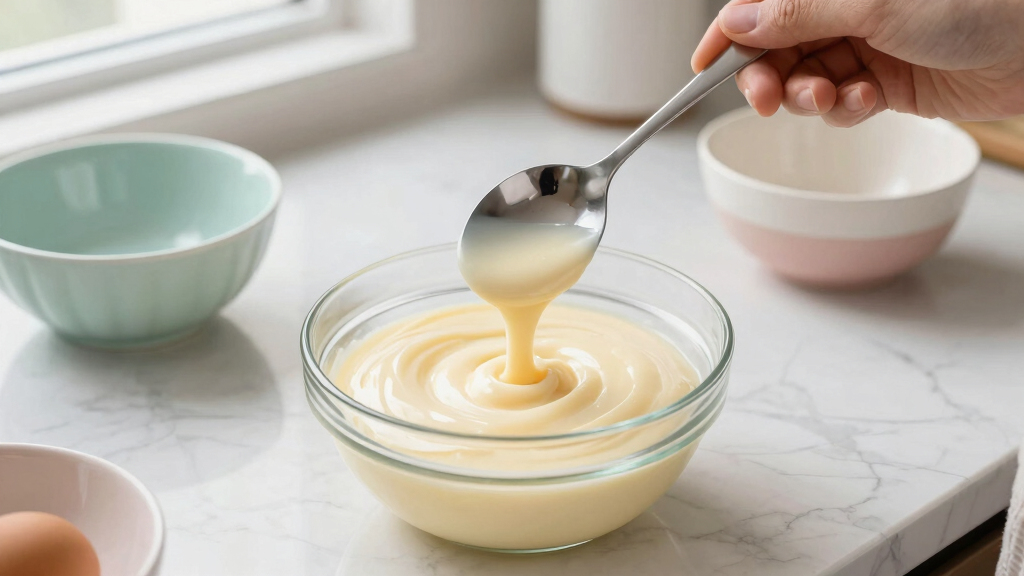
Imagine pouring hot custard over a spoon—if it’s smooth and glossy, you’ve chosen wisely.
But beyond choosing quality ingredients, understanding their roles helps you troubleshoot and optimize your custard. Fresh eggs provide a better protein structure that coagulates evenly, reducing the risk of lumps. Rich dairy fats contribute to a silky mouthfeel and help stabilize the mixture during cooking. Stabilizers like cornstarch act as a buffer, absorbing some of the heat’s impact on proteins, which is especially useful if your heat isn’t perfectly controlled. Recognizing these tradeoffs—such as the slight thickening effect of stabilizers versus the natural silkiness of unaltered custard—allows you to tailor your approach based on your desired texture and ingredients available. This knowledge empowers you to make adjustments that suit your specific recipe and equipment, ensuring a consistently smooth result.
How to Cook Custard the Foolproof Way
Follow these 5 steps to master foolproof custard:
- Heat your liquids gently: Warm the milk or cream before adding eggs to prevent shocking the proteins.
- Mix eggs and liquids carefully: Whisk eggs with a bit of sugar or flavoring, then slowly pour the warm liquid in, whisking constantly.
- Use a water bath (bain-marie): Place your custard dish inside a larger pan filled with hot water. Bake or cook on low heat—around 325°F (160°C)—for even, gentle heat.
- Monitor temperature: Use a probe thermometer—don’t let it go above 170°F (77°C). Remove from heat as soon as it reaches that point.
- Stir or strain: For extra smoothness, stir gently during cooking or strain the finished custard through a fine sieve.
Understanding why these steps matter helps you appreciate the science behind smooth custard. Gentle heating prevents sudden protein coagulation, while a water bath ensures even heat distribution, reducing hot spots that cause curdling. Monitoring temperature allows you to catch the custard at the perfect moment—thickened but not overcooked. Stirring or straining isn’t just about texture; it also helps break up any small lumps that might form, ensuring a truly velvety finish. These techniques, when combined, create a controlled environment where each element works together to produce a consistently silky custard, highlighting the importance of patience and precision in cooking.
Modern Tools and Tricks to Keep Custard Smooth
Techniques like sous-vide cooking revolutionize custard making. By sealing your mixture and cooking it at a precise temperature—say, 170°F for an hour—you eliminate the risk of curdling altogether. It’s like giving your custard a gentle, warm hug.
Another trick? Using a double boiler or a heavy-bottomed pan ensures even heat distribution. And don’t forget to stir constantly if cooking on the stovetop—this prevents proteins from clumping.
Plant-based milks or stabilizers like agar can also help create dairy-free custards that stay smooth, broadening your options.
These modern techniques and tools not only simplify the process but also remove many variables that traditionally cause curdling. Sous-vide, for instance, offers unparalleled temperature control, which is critical because even slight variations can lead to lumps or runny textures. Using a double boiler or heavy-bottomed pan ensures heat is distributed evenly, preventing hot spots that can cause uneven coagulation. Constant stirring during stovetop cooking disperses heat and proteins uniformly, reducing the risk of sudden curdling. Incorporating plant-based stabilizers like agar allows for dairy-free options without sacrificing smoothness, but understanding how these work—by setting and thickening at specific temperatures—helps you use them effectively. Embracing these modern techniques means you can achieve professional-quality custard with less guesswork and more consistency, making the process both easier and more reliable.
Troubleshooting Curdled Custard: How to Fix It or Prevent It
If your custard is already curdled, don’t panic. Sometimes, a quick whisk or blend with an immersion blender can smooth things out, but it’s not always guaranteed. Passing it through a fine sieve removes lumps and restores creaminess, which can salvage a less-than-perfect batch. However, this is more of a patch than a fix, and the texture may not be as ideal as intended.
Prevention is better than cure. Always cook slowly, monitor temperature, and avoid boiling. If in doubt, remove from heat early—remember, custard thickens off the heat as it cools. Recognizing the signs of impending curdling—such as sudden thickening or graininess—allows you to take immediate action, like removing from heat or gently stirring. This quick response can sometimes save a batch, but it’s better to understand the underlying causes—like excessive heat or rapid temperature changes—and adjust your technique to prevent it altogether. The key takeaway: a little patience and vigilance during cooking will save you time and frustration, ensuring your custard remains luxuriously smooth from start to finish.
Comparing Traditional and Modern Custard-Making Techniques
| Method | Control | Ease of Use | Result |
|---|---|---|---|
| Stovetop, direct heat | Moderate to high | Moderate | Potential for curdling if not watched |
| Water bath (bain-marie) | Excellent | Moderate | Very smooth, even texture |
| Sous-vide | Perfect | Easy once set up | Silkiest, most consistent custard |
Frequently Asked Questions
How can I prevent my custard from curdling during cooking?
Control the heat carefully—use a water bath or a low, gentle simmer. Stir constantly or gently, and monitor the temperature with a thermometer to stay below 170°F (77°C). Recognizing the signs of overheating, such as sudden thickening or graininess, allows you to react early and save your custard from curdling. Patience and vigilance are your best tools—by maintaining steady, gentle heat, you give the proteins time to coagulate evenly, resulting in a smooth, velvety texture.
What ingredients help keep custard smooth?
Fresh eggs, high-quality dairy, and stabilizers like cornstarch or arrowroot powder are your best bets for silky, curdle-free custard. Understanding their roles is key: eggs provide the primary structure, but their proteins are sensitive to temperature. Using fresh eggs ensures a better protein network that coagulates uniformly. Rich dairy fats contribute to a luxurious mouthfeel and help buffer against heat shocks. Stabilizers act as insurance—absorbing excess heat impact and preventing sudden coagulation. Balancing these ingredients, knowing their properties, and applying them thoughtfully allows you to craft consistently smooth custard, even when conditions aren’t perfect.
Can I make custard without eggs?
Yes. Use plant-based thickeners like cornstarch or agar, blended silken tofu, or commercial egg replacers for a dairy-free, smooth custard. These alternatives set at specific temperatures, mimicking the coagulation process of eggs. For example, agar sets quickly and creates a firm, smooth texture, but requires precise temperature control to avoid a rubbery consistency. Understanding the tradeoffs—such as slightly different textures or flavors—is important. Using these ingredients effectively involves knowing how they react to heat and how to incorporate them into your recipe for a stable, silky result that rivals traditional custard.
What’s the ideal temperature for cooking custard?
Keep it around 170°F (77°C). This temperature allows proteins to coagulate and thicken without curdling. However, the exact temperature can vary depending on your ingredients and method. The key is to cook slowly and monitor carefully—using a thermometer ensures you stay within this safe zone. Going above this range risks rapid coagulation, leading to lumps or curdled texture, while too low produces undercooked, runny custard. Recognizing the visual cues—such as a slight thickening without separation—is also helpful. Mastering this temperature range and understanding the science behind it gives you control over the final texture, making your custard reliably smooth and perfect every time.
How do I fix curdled custard?
Whisk vigorously or blend it smoothly. Passing it through a sieve can also help restore a silky texture. However, these are often temporary fixes, and the texture may not be as ideal as intended. To improve your chances of success in future batches, analyze what caused the curdling—was the heat too high, or was it added too quickly? Adjust your technique accordingly. Sometimes, gently reheating and stirring can help re-emulsify the mixture, but it’s a delicate process. Ultimately, prevention—by controlling heat, stirring gently, and monitoring temperature—is the most reliable way to ensure a perfectly smooth custard from the start, avoiding the need for repairs.
Conclusion
The secret to perfect custard is simple: patience and control. Gentle heat, quality ingredients, and a few smart tricks turn a potential mess into silky perfection. Remember, the only thing better than a smooth custard is the confidence you gain from making it that way.
Next time you’re in the kitchen, picture that glossy, velvety texture—then go make it happen. Your desserts will thank you.