
TL;DR

Get baking supplies delivered free with Prime
- Fast, free delivery on millions of items
- Prime Video, Amazon Music and more included
- Member-only deals all year
A recipe’s success depends on variables like ingredient quality, equipment, and environment. Small differences can turn a perfect bake into a flop, but with awareness, you can adapt and succeed every time.
Small ingredient differences—brand, freshness, quality—can dramatically change the outcome.
Your oven’s accuracy and cookware material matter; calibrate regularly and choose wisely.
Environmental factors like humidity and altitude require recipe adjustments.
Mastering technique and paying attention to detail improves consistency.
Use technology and small tests to adapt recipes specifically to your kitchen’s quirks.
How Ingredient Quality and Variability Change Your Baking Results
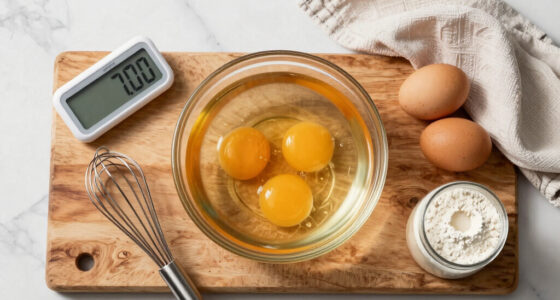
Ingredients aren’t created equal. Freshness, brand, and even the variety can make or break your baking. For example, using flour from a different supplier might change how your dough feels—more crumbly or more elastic. Salt from one brand might be saltier or less salty, affecting flavor and even how baked goods rise. An example? I once swapped a store-brand baking soda for a premium one; my cookies spread flat because the leavening wasn’t strong enough.
Always check ingredient freshness, especially for baking powder, yeast, and butter. Keep a small pantry checklist:
- Fresh baking powder (try the fizz test)
- Yeast within its expiry date
- High-quality butter for flavor and moisture
Products Worth Considering

Le Creuset Enameled Cast Iron Round Dutch Oven, 5.5 Qt, Flame

Le Creuset Signature Enameled Cast Iron Round Dutch Oven, 5.5 qt, Deep Teal

Le Creuset Enamemed Cast Iron Oval Dutch Oven, 5 qt., White/Crucible
As an affiliate, we earn on qualifying purchases.
Why Your Oven or Cookware Can Sabotage Your Baking Even If You Follow the Recipe
Your oven’s quirks are often the sneaky villains. A calibrated oven might be 10-15°F off, which in baking can mean the difference between a perfectly risen loaf and a dense brick. Convection ovens circulate heat more evenly, but if you’re used to a traditional oven, you might need to adjust baking times. Same goes for cookware—cast iron heats differently than stainless steel.
Imagine baking bread in a vintage oven that runs hot on the edges and cool in the center. The crust burns before the inside cooks. A simple fix: invest in an oven thermometer and monitor actual temps. For cookware, consider your material: non-stick pans heat quickly but can cause uneven browning, while heavy-duty cast iron distributes heat more evenly.
Environmental Factors: How Humidity and Altitude Impact Your Baking
Ever notice that cookies spread too much on a humid day, or bread struggles to rise in the mountains? These are environmental factors at play. High humidity adds moisture to your ingredients, making flour absorb more water and possibly leading to dense baked goods. At high altitudes—say above 3,000 feet—water boils faster, and leavening gases escape more quickly, often causing baked goods to collapse.
For example, I once baked muffins at a mountain cabin and they barely rose. The fix? Increase oven temperature slightly, reduce leavening by about 25%, and add a touch more flour or liquid as needed. Simple adjustments can save your baking day.
How Your Technique and Experience Influence Your Baking Success
Technique isn’t just about following steps—it’s about understanding why each step matters. Overmixing batter can develop gluten and make muffins tough. Under-kneading bread yields a dense crumb. Even how you handle ingredients, like butter temperature or folding in egg whites, changes the outcome.
For instance, I once overmixed pancake batter, resulting in rubbery pancakes. The solution: mix just until ingredients are combined. Practice and paying attention to detail turn a beginner’s mistake into a learned skill, making your baked goods more reliable.
Adapting Recipes: How to Adjust for Your Kitchen’s Unique Conditions
Every kitchen is different. When a recipe doesn’t turn out, it’s often because it was written for a different environment. To adapt, start with small adjustments. If your bread doesn’t rise, tweak the yeast amount or proofing time. If cookies spread too much, check your butter’s temperature and flour type.
Here’s a simple step-by-step:
- Identify what went wrong—dense, flat, over-baked?
- Adjust one variable—like leavening or temperature.
- Test with a small batch before scaling up.
Over time, you’ll develop an intuition for your specific kitchen conditions and ingredients.
The Role of Modern Tech and Data in Making Recipes More Foolproof
Today’s gadgets—smart thermometers, connected ovens, recipe apps—are changing how we cook. They help us monitor temperature precisely and adjust on the fly. For example, a smart oven that knows your target temperature and adjusts heating can prevent common errors like under-baking or over-baking.
Data from these tools shows that even a 5°F difference can change the texture of a cake dramatically. Chefs and bakers now analyze these variables to create more adaptable, resilient recipes. This means less guesswork and more consistent success, even if your kitchen isn’t perfect.