
TL;DR
Acidity plays a quiet but vital role in baking, influencing rise, flavor, and shelf life. Adjusting pH with natural ingredients or fermentation can elevate your baked goods with better texture and taste.
Balancing acidity influences dough rise, crumb softness, and flavor brightness.
Natural acids like vinegar, lemon juice, and fermented starters are effective tools for controlling pH.
Controlled acidity can extend shelf life by inhibiting mold and bacteria growth.
Small pH adjustments can have noticeable impacts—don’t be afraid to experiment.
Understanding acidity helps you craft healthier, tastier baked goods with better digestibility.
How acidity controls your dough’s rise and texture
Acidity affects the pH level of your dough, which in turn influences yeast activity and gluten strength. A slightly acidic environment encourages yeast to produce more gas, giving your bread a better rise and open crumb. For example, adding a teaspoon of vinegar to bread dough can boost fermentation without overdoing it.
In contrast, too much acidity can weaken gluten and make your baked goods dense, so balancing is crucial. Think of it like a recipe’s delicate dance—too acidic, and the structure collapses; just enough, and you get that light, airy crumb you crave.
Understanding this balance is essential because it impacts the final texture of your baked goods. Too little acidity might result in bread that’s heavy or dense, while too much can lead to a gummy or overly crumbly crumb. The goal is to find that sweet spot where gluten development and yeast activity are optimized, resulting in a tender, well-risen loaf with an appealing open crumb.

Amazon Saver, Distilled White Vinegar, Great for Cooking and Cleaning, 16 Fl Oz
- Bottle Size: 16 Fl Oz
- Acidity Level: 5%
- Uses: Cooking and Cleaning
As an affiliate, we earn on qualifying purchases.
As an affiliate, we earn on qualifying purchases.
Why a touch of acidity brightens flavor and aroma
Slight acidity can lift the flavors of baked goods, making them taste more vibrant and well-rounded. Think of a lemon loaf or a tangy sourdough—those bright notes come from increased acidity. When you bake with ingredients like buttermilk or yogurt, their inherent acidity enhances aroma and balances richness.
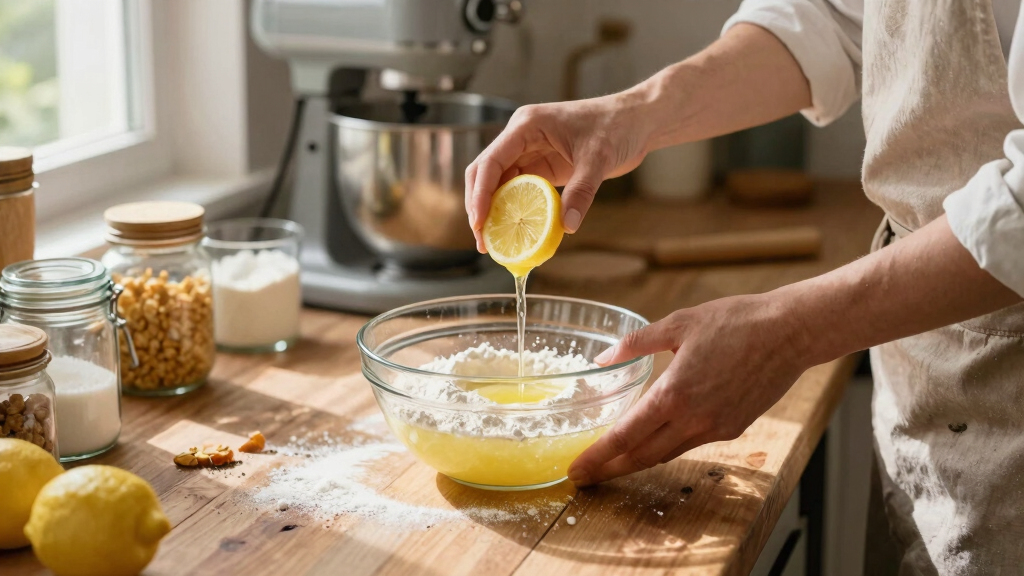
From a flavor perspective, acidity acts as a flavor enhancer, similar to how salt works, but in a more subtle way. It can amplify the perception of sweetness or richness, creating a more complex taste profile. For example, adding a splash of lemon juice to muffins not only makes them taste fresher but also releases a fragrant, citrus aroma that fills your kitchen. This can make your baked goods more appealing and memorable, especially when layering flavors or creating contrast.
Moreover, the aroma compounds released by acids can stimulate the olfactory senses, making your baked goods smell as good as they taste. This interplay between acidity and aroma can elevate simple recipes into more sophisticated treats, giving you more control over the sensory experience of your baking.

BAVIFY Sourdough Starter Kit, Banneton Bread Proofing Baskets Set
- Complete Sourdough Baking Kit: Includes tools for every baking step
- Premium Natural Rattan Baskets: Made from 100% Indonesian natural rattan
- Chemical-Free and Safe: Free from dyes and chemicals
As an affiliate, we earn on qualifying purchases.
As an affiliate, we earn on qualifying purchases.
How acidity interacts with leavening agents like baking soda
Baking soda (sodium bicarbonate) needs acid to produce carbon dioxide, which leavens your baked goods. Without enough acid, your bread or cake won’t rise properly, leading to flat or dense textures. When you add an acid like lemon juice or vinegar to a recipe with baking soda, it reacts immediately, releasing carbon dioxide gas that creates bubbles and expands during baking, resulting in a light, fluffy texture.
This reaction is crucial because it determines how much lift you get from your leavening agent. If the acid is insufficient, the reaction is incomplete, and the final product can be less airy. Conversely, too much acid can cause rapid gas release, leading to irregular cell structures or a tangy flavor that might overpower the baked good. Therefore, understanding this interaction allows you to fine-tune your recipes for optimal rise and flavor balance.
For example, if your cake is dense, adding a small amount of vinegar or lemon juice can boost the acid level, ensuring the baking soda reacts fully. This balance is especially important when adapting recipes or working with substitutions, as it helps maintain consistent results regardless of ingredient variations.

As an affiliate, we earn on qualifying purchases.
Controlling acidity for perfect crumb and shelf life
Acidity influences gluten networks, which shape your crumb’s softness and openness. A mildly acidic environment can strengthen gluten, leading to a tender yet structured crumb. Think of sourdough, where the natural acids help develop a chewy crust and airy interior. This balance affects not only texture but also how the bread retains moisture and freshness over time.
Plus, acidity acts as a natural preservative. It inhibits mold and bacterial growth, extending the shelf life of bread. For example, a sourdough loaf can stay fresh for days longer than a typical white bread, thanks to its acidity. This preservation effect is especially valuable for artisan bakers or those making bread in advance, as it reduces waste and maintains quality longer.
However, too much acidity can lead to overly dense bread or a sour flavor that may not suit all palates. Therefore, managing acidity levels is a balancing act—enough to enhance preservation and texture, but not so much as to compromise flavor or crumb structure. Understanding these principles helps you develop baking routines that optimize both quality and longevity.

3 Pack pH.1-14 Test Paper Extensive Test Paper Litmus Test Paper 240 Strips pH Test with Storage Case for Saliva Urine Water Soil Testing Pet Food and Diet pH Monitoring (3 Pack with Storage Case)
- Paper Size: 45mm x 7mm
- Includes: 3 packs with 240 strips and case
- Color Change Time: Within 15 seconds
As an affiliate, we earn on qualifying purchases.
As an affiliate, we earn on qualifying purchases.
Latest advances: natural acids and fermentation science
Recent baking trends focus on natural acids like apple cider vinegar, lemon juice, and fermented ingredients. These add flavor complexity while keeping recipes wholesome. For example, bakers now use fermented sourdough starters—not just for flavor but for better digestibility and longer freshness.
Research shows that controlling fermentation time and acidity levels helps develop specific flavor profiles and improves gluten development. This isn’t just about taste—it’s about creating healthier, more digestible baked goods. Advances in fermentation science have enabled bakers to manipulate acidity more precisely, leading to innovations like probiotic-rich baked items or breads with tailored flavor notes. These developments also open doors for more sustainable baking practices by reducing reliance on chemical preservatives and artificial additives.
In essence, understanding and harnessing natural acids through fermentation science allows bakers to craft products that are not only tastier but also healthier and longer-lasting, aligning with modern consumer preferences for natural and functional foods.
How to fine-tune acidity in your baking: 3 simple steps
- Identify your goal: flavor brightness, rise, or shelf life.
- Select your acid: vinegar, lemon juice, yogurt, or fermented starter.
- Add gradually, testing small batches—aim for a pH between 5.0 and 6.0 for most baked goods.
For example, if your bread isn’t rising enough, try adding a teaspoon of apple cider vinegar to boost acidity without overpowering the flavor. Remember, small adjustments can have significant effects because pH influences multiple aspects of baking, from gluten development to microbial activity. Monitoring your results and understanding how each acid interacts with your ingredients helps you create a more consistent and refined product over time.