TL;DR
Folding is a gentle mixing method that preserves air bubbles in your batter. Proper technique prevents deflation, ensuring your baked goods stay light and airy. Mastering this simple step makes a big difference in your baking results.
Folding is a gentle mixing method that preserves air bubbles, vital for light, fluffy baked goods.
Use a flexible silicone spatula and slow, sweeping motions to fold without deflating your batter.
Avoid overfolding — it collapses the air and makes baked goods dense.
Proper folding can turn a flat, dense cake into a cloud of tender crumb.
Tools like wide spatulas and large bowls make the process easier and more effective.
The Folding Technique That Keeps Air in Your Batter
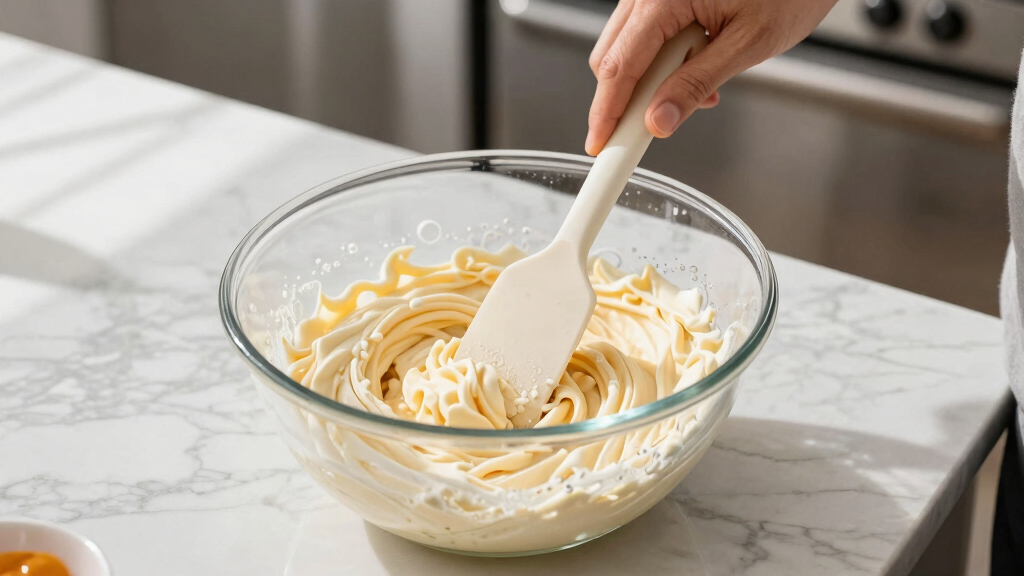
The difference between a cloud-soft crumb and a flat, heavy bake often comes down to one quiet movement: cut through the center, lift from beneath, and turn the batter over itself.
Air is an ingredient. Folding is how you protect it.
Whipped egg whites and cream contain networks of tiny bubbles. Heavy batter must be incorporated around those bubbles without crushing them. Every controlled fold balances even mixing against air loss.
Preserves lift
Gentle lifting keeps more bubbles intact, giving sponge cakes, soufflés, pancakes, and mousses the structure they need to rise.
Limits toughness
Unlike vigorous stirring, folding minimizes unnecessary gluten development and helps the finished crumb remain light and tender.
Combines evenly
Wide, deliberate passes distribute ingredients without repeatedly working the same area or leaving dense pockets behind.
The four-movement fold
Move slowly, but work with purpose. Rotate the bowl slightly after every pass so the whole mixture is incorporated.
Cut
Insert the spatula vertically through the center until it reaches the bottom of the bowl.
Sweep
Draw the spatula along the bottom, collecting the heavier mixture beneath the foam.
Lift
Bring the lower batter upward in one broad, smooth motion without pressing it flat.
Turn
Fold the lifted batter over the top, rotate the bowl, and begin the next gentle pass.
The ideal working zone
Aim for roughly 10–15 folds, stopping as soon as the mixture is uniform. Recipe instructions always take priority.
Stop while the batter still looks alive
Overfolding repeatedly compresses the foam. Watch the batter, not just the fold count.
Gentle motions protect the bubble network
Relative air retained
A practical comparison of how mixing intensity affects delicate, aerated batter.
Illustrative index based on the stated finding that careful folding may preserve up to 50% more air than vigorous stirring. Actual retention varies by recipe and foam stability.
Read the batter
Visual and tactile clues reveal whether the mixture is ready or has gone too far.
Underfolded
Visible streaks, uneven pockets, and unmixed ingredients.
Ready
Uniform, airy, softly glossy, and still visibly voluminous.
Overfolded
Heavy, dull, runnier, and noticeably reduced in volume.
| Mixing method | Air protection | Best application | Primary risk |
|---|---|---|---|
| Slow folding | ✓High | Whipped whites, cream, sponge, mousse | Under-mixing if stopped too early |
| Fast folding | ~Moderate | Sturdier foams and less delicate mixtures | Pressure ruptures fragile bubbles |
| Vigorous stirring | ×Low | Non-aerated sauces or dense mixtures | Deflation and excess gluten development |
| Electric mixing | ×Very low | Creating foam before incorporation | Rapid collapse after foam is formed |
Use tools that lift broadly and move freely
The right setup reduces the force required to combine ingredients. More room and a wider lifting surface mean fewer, cleaner passes through the batter.
Silicone spatula
Flexible enough to sweep beneath the mixture and wide enough to lift it without cutting through too many bubbles.
Best all-round choiceLarge bowl
Extra space allows a full sweeping motion, prevents spills, and avoids forcing the batter against cramped sides.
Choose wide over deepFolding paddle
A broad, purpose-shaped surface can lift larger portions evenly while reducing wrist strain and excess passes.
Useful for large batchesThe chain from motion to crumb
A successful bake is the final link in a sequence. Protect the foam early and every later stage benefits.
Common folding questions, answered
Can I fold ingredients besides egg whites?
Yes. Use folding for whipped cream, fruit, chocolate chips, flour, or other delicate additions whenever you want to preserve air or avoid overmixing.
How do I know when I am done?
Stop as soon as the mixture is uniform and no major streaks remain. Around 10–15 folds is common, but the batter’s appearance is the better guide.
What if the batter is very thick?
Lighten the heavier mixture first with a small portion of the foam. Then fold in the remainder gradually with a wide spatula.
Which mistakes cause the most damage?
Vigorous stirring, repeatedly scraping and pressing, overfolding, using a cramped bowl, and working with batter that has become too warm.
DR
Cut, sweep, lift, turn—and stop early.
Use a large bowl and flexible spatula. Fold only until just combined. The goal is not merely to mix the batter; it is to combine it while preserving the air that creates rise, tenderness, and a beautifully light crumb.
What exactly is folding, and why does it matter?
Folding is a gentle mixing technique designed to preserve air bubbles in your batter. Instead of stirring vigorously, you lift and turn the mixture over itself using a spatula or spoon. Imagine gently folding a delicate fabric — you want to keep its softness intact. This method is essential when incorporating whipped egg whites or cream into heavier batters, as it maintains the lightness needed for a fluffy finish.
Think of it like folding a flag — slow, controlled, and with care. When done correctly, folding ensures your batter stays airy, which translates directly into a better rise and a more tender crumb in your baked goods. The importance of this technique extends beyond just fluffiness; it affects the overall texture, moisture retention, and even the appearance of your final product. Proper folding prevents deflation, which can lead to dense, flat baked goods and wasted ingredients. The tradeoff is that it requires patience and a gentle touch—rushing or applying too much force can undo all your effort, collapsing the delicate air pockets you’ve worked hard to incorporate.

ChefAide 5 Pieces Silicone Spatula Set, Food Grade Rubber Spatula, Upgrade Strong Handle with Ergonomic Grip, Heat Resistant Up to 600°F for Nonstick Cookware, Cooking
- Material: Food Grade Silicone, Heat Resistant to 600°F
- Design: Seamless One-Piece Construction for Easy Cleaning
- Balance: Flexible Yet Sturdy for Versatile Use
As an affiliate, we earn on qualifying purchases.
As an affiliate, we earn on qualifying purchases.
How to fold batter without losing all that precious air
- Start with a large mixing bowl — more room means gentler folding and less risk of spilling.
- Use a flexible silicone spatula for smooth, gentle motions that lift rather than stir.
- Insert the spatula into the center of the batter, cut straight down to the bottom, avoiding scraping the sides.
- Lift the batter from the bottom, then fold it over the top, turning the bowl slightly with each fold.
- Repeat this process about 10-15 times, or until the ingredients are just combined and the mixture is uniform.
Imagine you’re turning a delicate piece of fabric, with slow, sweeping motions that preserve its integrity. The goal is to gently incorporate ingredients without breaking the air bubbles that give your batter its lift. The tradeoff here is between thoroughness and gentleness; overdoing the folds can cause deflation, but underdoing them may leave ingredients unevenly mixed. Finding the right balance ensures your batter remains airy and well-integrated, leading to a better rise and texture in your baked goods.

Winco 8 qt Stainless Steel Mixing Bowl
- Material: Stainless steel for durability
As an affiliate, we earn on qualifying purchases.
As an affiliate, we earn on qualifying purchases.
Why overfolding ruins your batter’s fluffiness
Overfolding is like overworking a piece of dough — it collapses under its own weight. Once you’ve folded about 20-30 times or observe that the batter has lost its shine, volume, and delicate structure, you’ve gone too far. Each fold exerts pressure that can rupture the tiny air bubbles responsible for the batter’s lightness. When these bubbles pop, the batter deflates, resulting in a dense, heavy texture instead of the desired airy crumb.
Think of a balloon — once it’s popped, no amount of effort can restore its shape. The same applies here; the delicate balance of air trapped inside is lost through excessive folding. The tradeoff is clear: while some folding is necessary for even mixing, overdoing it compromises the very air that gives your baked goods their signature lightness. The key is to recognize the signs of overfolding—such as a batter that looks deflated, lacks shine, or feels heavy—and to stop immediately. Properly folded batter retains a shiny, airy appearance, which is a good indicator that you haven’t overdone it.

Silicone Spatula Set, Food Grade Rubber Spatula-4 Piece Nonstick Rubber Spatulas, Spoonula, Jar Scraper for Cooking, Baking, Mixing, Frosting – Heat Resistant Up to 600°F (4 Pcs Spatula Off-White)
- Material: Food-grade silicone, heat resistant to 600°F
- Design: Ergonomic walnut wood handle for comfort
- Versatility: Suitable for cooking, baking, mixing, frosting
As an affiliate, we earn on qualifying purchases.
As an affiliate, we earn on qualifying purchases.
Tools that make folding easier and more effective
| Tool | Benefit |
|---|---|
| Silicone spatula | Flexible, gentle, and able to lift and turn batter without deflating it, ensuring delicate air bubbles are preserved. |
| Large mixing bowl | Provides ample space to fold ingredients gently and thoroughly without spilling or forcing the batter. |
| Folding paddle (optional) | Designed specifically to lift and turn batter evenly, reducing strain on your wrist and improving consistency. |
Using the right tools isn’t just about convenience; it’s about protecting the delicate structure of your batter. A wide, flexible spatula helps you perform gentle folds without exerting excessive force, while a large bowl prevents accidental spills and allows for more controlled movements. The optional folding paddle can make the process even easier by providing a dedicated shape that facilitates lifting and turning. Investing in these tools reduces the risk of overmixing or damaging the batter’s air pockets, leading to more consistent, fluffy results.

Mrs. Anderson’s Baking Cake Tester, Stainless Steel Stem, BPA Free, 8-Inches Long
- Product Name: Mrs. Anderson’s Cake Tester
- Material: Stainless steel with BPA-free plastic
- Length: 8 inches long
As an affiliate, we earn on qualifying purchases.
As an affiliate, we earn on qualifying purchases.